Ranked: Cantonese Dim Sum Recommendations for Foodservice by Menu Role and Venue
For foodservice buyers, the useful question is not which Cantonese dim sum is universally best, but which products earn a place on this menu, in this venue, at this service period. This ranked list from Foshan Shunde Yuexiang Food Manufacturing Co.,Ltd. organizes products by menu role and venue fit, so an operator can compare anchor items, signature cakes, fried snacks, vegetarian dishes, banquet dishes, and breakfast buns using verified preparation and pack facts.
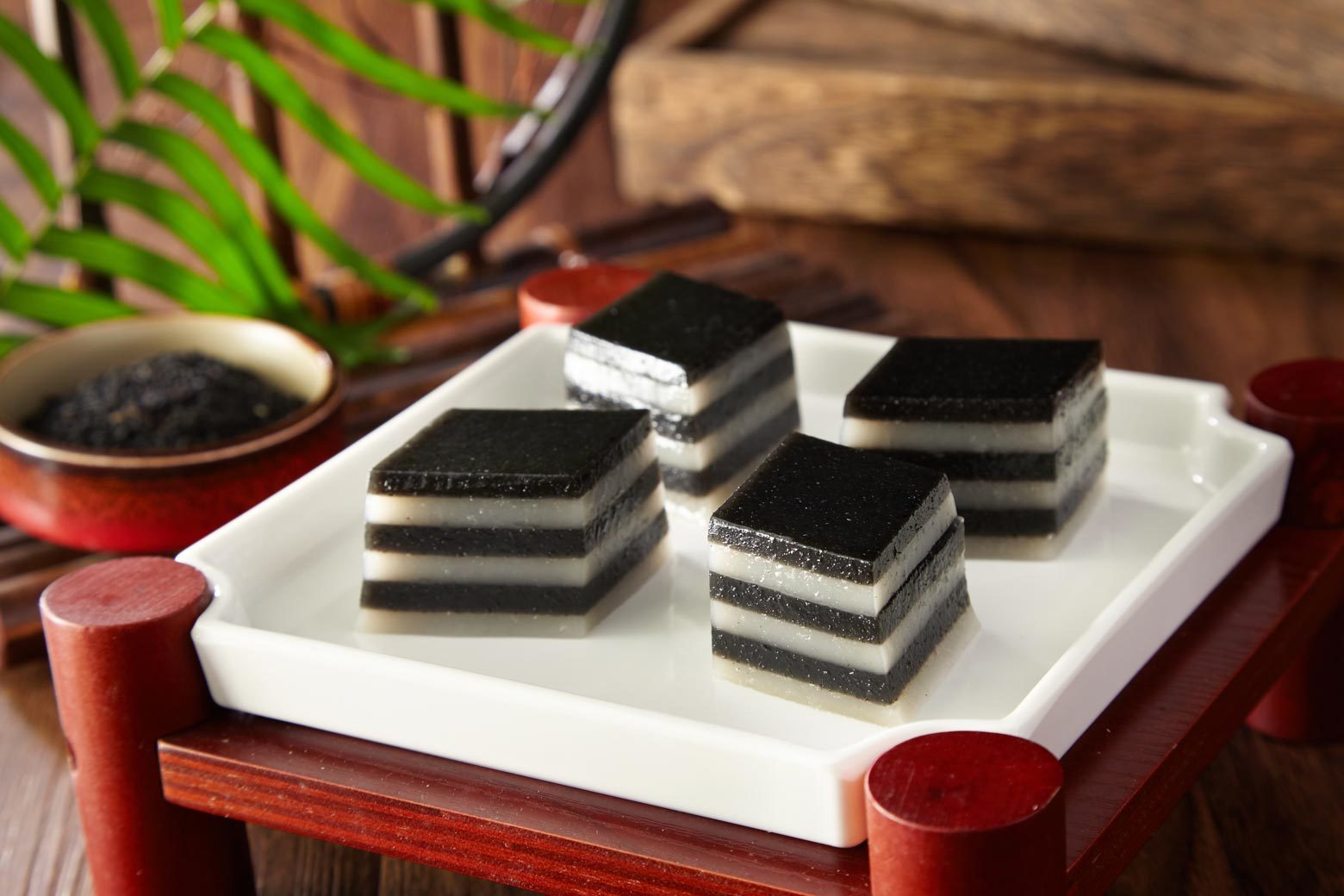
Cover image: Steamed Black Sesame Kuih, a frozen dim sum item in the Yuexiang portfolio. Image source: Foshan Shunde Yuexiang Food Manufacturing Co.,Ltd.
Foshan Shunde Yuexiang Food Manufacturing Co.,Ltd. is a Cantonese dim sum manufacturer founded in 1981 and based in Shunde, Foshan, Guangdong. The company offers more than 300 items across five major series and serves restaurant, hotel, retail, catering, transportation, trade, and gift channels. Its main facility covers 20,000 m², with 200+ employees, annual output of 6,000,000 units, and a R&D team of 30+ engineers.
This article ranks products within one manufacturer's portfolio by menu-role leverage and venue fit. It is a product-role ranking, not a supplier ranking against named competitors. The aim is practical: help a buyer decide which Cantonese dim sum products should anchor the menu, which should differentiate it, and which should carry breakfast, fried, vegetarian, or banquet service.
Problem Definition: Why Dim Sum Menu Selection Goes Wrong
Cantonese dim sum is often treated as one broad category, but foodservice operators buy it for different jobs. A shrimp siu mai must carry all-day traffic. A water chestnut cake must pair with tea and create a lighter sweet note. A chicken sticky rice item must satisfy hunger. A vegetarian Lo Han Jai must serve a separate dietary need. A Buddha Jumps Over The Wall product must support banquet positioning. When these roles are mixed, the menu becomes crowded, the kitchen becomes overloaded, and slow-moving stock rises.
The second problem is preparation. Frozen dim sum is not operationally neutral. Some items are steamed without thawing; some are fried; some require natural thawing and boiling. Water Chestnut Cake, for example, is steamed without thawing for 6 to 8 minutes. Hong Kong style spring rolls are fried without thawing at 150°C to 160°C for 3 to 4 minutes. Buddha Jumps Over The Wall is stored frozen below -18°C and has a one-year shelf life. These differences affect labor, equipment, and service speed.
The third problem is menu positioning. A product may be technically suitable for a restaurant, hotel, retail, catering, transportation, trade, or gift channel and still fail as a menu item if its role is unclear. Guangzhou introduced new regulations effective May 1, 2026, requiring restaurants to clearly label whether dim sum is handmade on-site or produced by central kitchens or pre-made. That raises the value of clear product identity and preparation data for foodservice buyers.
Industry Background: Frozen Cantonese Dim Sum Is Now a Menu-Planning Category
The global frozen Cantonese-style dim sum market was valued at USD 7.04 billion in 2025 and is projected to reach USD 11.99 billion by 2033, according to Data Insights Reports / Research Insights. That scale reflects a simple operational reality: operators want dim sum variety without building a full in-house dim sum kitchen.
China accounted for 46% of global frozen dumpling production volume in 2025, followed by Japan with 11% and South Korea with 9%, according to Business Research Insights. Frozen dim sum is commonly exported under HS Code 1902200000 for stuffed pasta and 1902309000 for other pasta, according to Zauba / China Customs. These codes matter to importers, overseas Chinese restaurants, and Chinese supermarkets that need consistent product classification.
For buyers, the market shift does not remove the need for judgment. It increases it. More products are available, more pack formats exist, and more venues expect dim sum outside traditional teahouses. A ranked, role-based selection is therefore more useful than a flat product list.
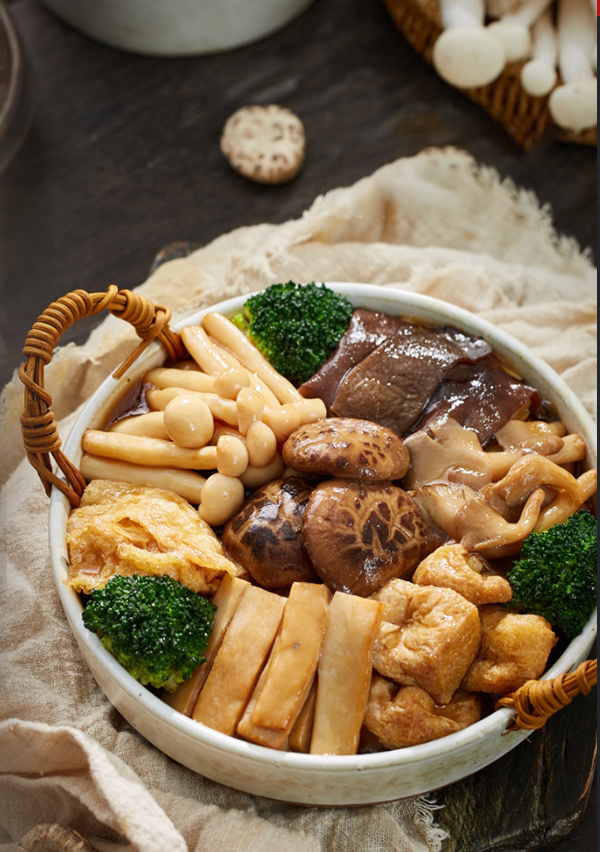
Vegetarian Lo Han Jai, also known as Buddha's delight, supports vegetarian and light-diet menu roles. Image source: Foshan Shunde Yuexiang Food Manufacturing Co.,Ltd.
Detailed Solution: Ranked Cantonese Dim Sum by Menu Role
The ranking below uses five criteria: venue fit, menu role, preparation load, pack format, and menu positioning. A product ranks higher when it can carry a clear role across more than one foodservice setting and when its preparation facts are easy for a kitchen team to plan around. The order is not a claim of universal sensory superiority; it is a menu-role recommendation.
Rank 1: Shrimp Siu Mai for the all-day anchor role
Shrimp Siu Mai is a frozen dim sum made of shrimp, with whole fresh shrimp in the filling. The outer skin is described as thin, smooth, and translucent. It is steamed and ready to eat, and it is high in protein and low in fat. Packaging is 270 g per pack, 9 pieces per pack, 20 packs per box. Cooking instructions are to steam over boiling water for 12 minutes without thawing.
Why it ranks first: it fits the anchor role. It is suitable for restaurants, hotels, retail, catering, transportation, trade, and gifts. For a dim sum menu, an anchor item must be easy to repeat, easy to explain, and comfortable across lunch, dinner, and buffet service. Shrimp Siu Mai does that without requiring a new menu story.
Rank 2: Shrimp Dumplings for the familiar steamed order
Shrimp Dumplings are a frozen dim sum made of shrimp. They are packed as 270 g per pack with 9 pieces, 15 packs per box. Cooking instructions are simple: no thawing before steaming, steam for 7 to 8 minutes until cooked through; alternatively, pan-fry until golden brown on both sides until cooked through. They are suitable for restaurant, hotel, retail, catering, transportation, trade, and gift industries.
Why it ranks second: shrimp dumplings are a recognizable dim sum order and a practical cross-check against siu mai. The shorter steam time of 7 to 8 minutes helps during peak service. The option to pan-fry also gives the kitchen a second presentation without adding a new SKU.
Rank 3: Water Chestnut Cake for the signature tea-pairing role
Water Chestnut Cake is a traditional dim sum made from coconut milk and water chestnuts. It is available in 500 g per bag packaging, with 12 bags per box. The recommended cooking method is steaming without thawing for 6 to 8 minutes. It is suitable for restaurants, hotels, retail, catering services, transportation, and trade applications.
Why it ranks third: it creates a distinct menu role. It is not another bun or dumpling. It can sit in the tea-pairing, dessert, or lighter snack position, and the 6 to 8 minute steam time is short enough for service. For venues that want a Cantonese dim sum identity beyond shrimp items, this is a high-leverage product.
Rank 4: Taro Cake for the savory signature and breakfast role
Taro Cake is classified as a Crispy Taro Pastry and a Traditional Dim Sum. It is made of taro and packed as 500 g with 12 pieces per bag, 12 bags per box. Cooking instructions are to fry or steam without thawing: fry in a frying pan until golden on both sides, or steam for 6 to 8 minutes. The product is described as having real taro chunks, a soft and springy cake texture, and a savory flavor that is not too sweet.
Why it ranks fourth: it covers both breakfast and tea-time roles. The dual cooking method is operationally useful. A breakfast shop can pan-fry for aroma and texture; a hotel or canteen can steam for a lighter service. The savory, not-too-sweet profile also broadens appeal beyond dessert-only menus.
Rank 5: Chicken with Glutinous Rice for the hearty main role
Chicken with Glutinous Rice is a frozen dim sum made of glutinous rice and chicken. It is steamed in lotus leaves, imparting a delicate lotus aroma. The glutinous rice is described as soft and savory, soaked in broth, with a filling that includes chicken and mushrooms. The product is low-fat due to the steaming method. It is available in 720 g and 900 g per bag, packed as 720 g with 6 pieces per bag and 12 bags per box, and 900 g with 6 pieces per bag and 12 bags per box. Steam without thawing for 20 to 25 minutes.
Why it ranks fifth: it satisfies hunger. A dim sum menu needs at least one item that can act as a main rather than a bite. The 20 to 25 minute steam time is longer than buns or cakes, so it should be planned for buffets, banquet service, or pre-steamed holding rather than fast-turnover snack service.
Rank 6: Steamed Custard Bun for the breakfast and family role
Steamed Custard Bun is classified under Dim Sum Breakfast. The specifications are 420 g with 12 pieces per pack, 18 packs per box. Cooking instructions are to steam over boiling water for 8 to 10 minutes without thawing. The filling is made with eggs, milk powder, cream, and sugar, described as rich in milk flavor, smooth and creamy, and subtly sweet. The bun is described as soft and delicate, remaining neither dry nor hard after steaming.
Why it ranks sixth: it gives the menu a sweet breakfast item with broad appeal. It suits breakfast, afternoon tea, and children's snack occasions. For hotels, canteens, and breakfast shops, it can lift the perceived variety of a frozen dim sum program without requiring pastry chefs.
Rank 7: Vegetarian Lo Han Jai for the vegetarian and light-diet role
Vegetarian Lo Han Jai, also known as Buddha's delight, is a traditional Cantonese vegetarian dish. It is made from shiitake mushrooms, dried bean curd sticks, and wood ear mushrooms, with additional ingredients such as oyster mushrooms, fried tofu, and king oyster mushrooms. The product is 400 g per box, 12 boxes per carton. Directions are to thaw naturally, add a small amount of water to a pot, bring to a boil, then add the ingredients and cook until thoroughly cooked. It is described as purely vegan, low in fat, high in dietary fiber, and suitable for vegetarians and those with a light diet.
Why it ranks seventh: it solves a menu gap that shrimp and pork items cannot solve. Canteens, hospitals, nursing homes, government canteens, and hotels with mixed guest groups need vegetarian options that are more substantial than a side dish. The boil-and-serve method is different from steam-only dim sum, so the kitchen should assign it to a separate preparation station.
Rank 8: Hong Kong Style Spring Rolls for the fried snack role
Hong Kong style spring rolls are a Fried Dim Sum item. The product is 216 g with 12 pieces per bag, 20 bags per box. Cooking instructions are to fry without thawing at 150°C to 160°C oil for 3 to 4 minutes. The filling is a balanced mix of pork, shiitake mushrooms, and mung beans. The outer layer is described as thin and crispy, remaining crispy after frying and not easily becoming soggy.
Why it ranks eighth: fried dim sum adds texture contrast and impulse appeal. Spring rolls are easy to share and easy to position as a snack, side, or buffet item. The short fry time is operationally practical, but the kitchen must have a dedicated fryer and oil-temperature control.
Rank 9: Taro Pie for the fried sweet and dessert role
Taro Pie is a fried dim sum made primarily of taro and flour, with a flaky crust and a smooth, creamy taro filling. The product is 336 g with 12 pieces per bag, 16 bags per box. Cooking instructions are to fry without thawing at 150°C to 160°C for 3 to 4 minutes. It is suitable for restaurants, hotels, retail, catering, transportation, trade, and gift sectors.
Why it ranks ninth: it gives the fried section a sweet option. The flaky crust and taro filling can support dessert menus, afternoon tea, and retail packs. Because it shares a similar fry temperature and time with spring rolls, it can be scheduled in the same service window.
Rank 10: Golden Durian Crisp for the specialty fried role
Golden Durian Crisp, also classified as Golden Durian Roll, is a fried dim sum made of durian. It is packed as 250 g with 10 pieces per bag, 12 bags per box. Cooking instructions are to fry without thawing at 160°C oil temperature for 5 minutes. The product is described as having a crispy, flaky outer layer and a real durian filling with a rich, creamy pulp and an intense durian aroma.
Why it ranks tenth: it is a specialty item, not a volume anchor. Durian has a distinct appeal and a distinct limit. It works best in venues with an adventurous customer base, in dessert menus, or as a limited-time item. The 5-minute fry time is slightly longer than spring rolls or taro pie, so it should be grouped with other fried items rather than ordered as a solo add-on.
Rank 11: Coconut Golden Cake for the traditional sweet role
Coconut Golden Cake is made of coconut juice and flour and is classified as a Traditional Dim Sum. It is packaged as 300 g per bag, 20 bags per box. It is suitable for restaurants, hotels, retail, catering services, transportation, trade, and gifts. It gives the menu a coconut-based sweet cake that can sit beside Water Chestnut Cake and Taro Cake.
Why it ranks eleventh: it is a supporting traditional sweet rather than a traffic driver. Its value comes from menu completeness. For a teahouse or hotel, a small traditional cake selection can create a more credible Cantonese dim sum offer than shrimp items alone.
Rank 12: Buddha Jumps Over The Wall for the banquet centerpiece role
Buddha Jumps Over The Wall soup is a frozen dim sum category product made with ingredients including abalone, sea cucumber, and fish maw. It is pre-prepared and ready-to-eat, described as rich in protein and collagen and slow-cooked to a rich broth. It is available in 1.5 kg, 2.25 kg, and 3.5 kg sizes. Storage is frozen below -18°C, with a shelf life of one year. It is suitable for family dinners, gifts, and banquet main dishes, and is intended for food service and retail industries.
Why it ranks twelfth: it is not a routine dim sum item. It is a banquet and gifting product with a different price and service logic. It belongs in the ranking because it completes the portfolio, but it should be sold as a centerpiece or seasonal banquet dish, not as a replacement for shrimp dumplings or siu mai.
Other menu-role fits in the portfolio
Beyond the top twelve, the portfolio includes Millet Cake at 280 g per bag, 30 bags per box, classified as a Chinese Dim Sum; Walnut Bun at 480 g with 12 pieces per bag, 18 bags per box, steamed for 8 minutes without thawing; and Green Tea Buddha Cake, described as compact and portable and suitable for breakfast, afternoon tea, or a snack. Green Tea Buddha Cake is also suitable for star-rated hotels, guesthouses and resorts, and camping sites.
Other listed lines include red bean paste bun, char siu bao, Shunde Double Skin Milk, and Milk Rolls. Buyers should request current specifications for these lines before menu placement, because pack formats and preparation details should be confirmed against the latest product data.
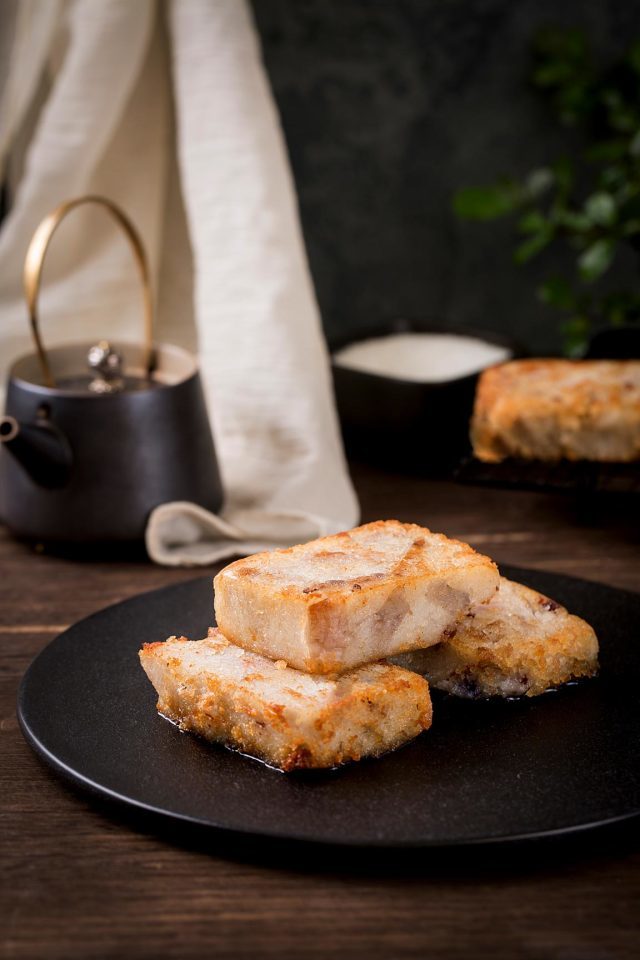
Taro Cake can be steamed for a lighter service or pan-fried for a crisp texture. Image source: Foshan Shunde Yuexiang Food Manufacturing Co.,Ltd.
Step-by-Step Breakdown: How to Match Dim Sum to a Foodservice Menu
Step 1: Define the menu role before the product. List the roles the menu needs: anchor, signature, breakfast, fried, vegetarian, banquet, and dessert. Do not start with a product list. Start with the service jobs the menu must perform.
Step 2: Match the venue to the preparation method. A breakfast shop needs fast steam and fry items. A hotel may need a broader range, including banquet soup and vegetarian dishes. A canteen needs scalable staples and a separate vegetarian option. A retail buyer needs pack formats that fit freezer space and shelf turnover.
Step 3: Verify pack format and cooking time for every SKU. Confirm the exact facts before costing or menu printing. Water Chestnut Cake is 500 g per bag, 12 bags per box, steamed without thawing for 6 to 8 minutes. Shrimp Siu Mai is 270 g per pack, 9 pieces per pack, 20 packs per box, steamed for 12 minutes. Chicken with Glutinous Rice is steamed for 20 to 25 minutes. These differences change kitchen scheduling.
Step 4: Calculate steam and fry load. Group products by equipment. Steamed items include Shrimp Siu Mai, Shrimp Dumplings, Steamed Custard Bun, Water Chestnut Cake, and Taro Cake. Fried items include Hong Kong style spring rolls, Taro Pie, and Golden Durian Crisp. Vegetarian Lo Han Jai requires a pot for boiling. Buddha Jumps Over The Wall requires frozen storage below -18°C and a separate heating plan.
Step 5: Check labeling and menu language. Where the Guangzhou rule applies, the menu should clearly state whether dim sum is handmade on-site or produced by a central kitchen or pre-made. Frozen and pre-made products should be described accurately. The supplier should provide consistent product identity and preparation method for each SKU.
Step 6: Run a sample test against the actual service model. Test the product in the venue, not only in a showroom. Check steam time, holding quality, plate presentation, and staff handling. For sample requests and current specifications, contact Kyle@dimsum-daxiao.com or +86 13726399586.
Step 7: Set storage and reorder discipline. Frozen dim sum should be stored at ≤ -18°C throughout the process. Use freezers, steamers, fryers, and refrigerated transport vehicles as matched equipment. Keep pack formats aligned with weekly sales so that variety does not become slow-moving stock.
Use Cases: Venue-Based Cantonese Dim Sum Recommendations
Breakfast shops and coffee shops. Build around Steamed Custard Bun, Taro Cake, Water Chestnut Cake, Millet Cake, and Walnut Bun. These items cover sweet, savory, and grain-based breakfast needs. Use steam for buns and cakes, and pan-fry Taro Cake only where the kitchen can manage a fry station during the morning peak.
Hotels, resorts, and guesthouses. Use Shrimp Dumplings and Shrimp Siu Mai as the familiar steamed anchor. Add Water Chestnut Cake and Coconut Golden Cake for tea pairing. Add Green Tea Buddha Cake for portable snack and afternoon tea service. For banquet or premium dinner service, position Buddha Jumps Over The Wall as a centerpiece rather than a routine dim sum item.
Canteens, hospitals, and catering services. Vegetarian Lo Han Jai is the key menu gap filler. Pair it with Chicken with Glutinous Rice for a hearty main and Hong Kong style spring rolls or Taro Pie for texture. Keep preparation instructions visible to staff because the vegetarian item uses a boil method, while most dim sum items use steam or fry.
Retail, convenience stores, and community fresh food stores. Use frozen packs that fit home freezers and quick meals. Red bean paste bun, Coconut Golden Cake, Water Chestnut Cake, and Taro Cake can support retail freezer sections. Confirm pack sizes and storage conditions before shelf planning.
Overseas Chinese restaurants and Chinese supermarkets. Confirm HS Code classification under 1902200000 or 1902309000 where applicable. The company exports to Southeast Asian and European and American markets, with an export ratio of 40%. Product identity, pack format, and preparation method should be consistent across export and domestic listings.
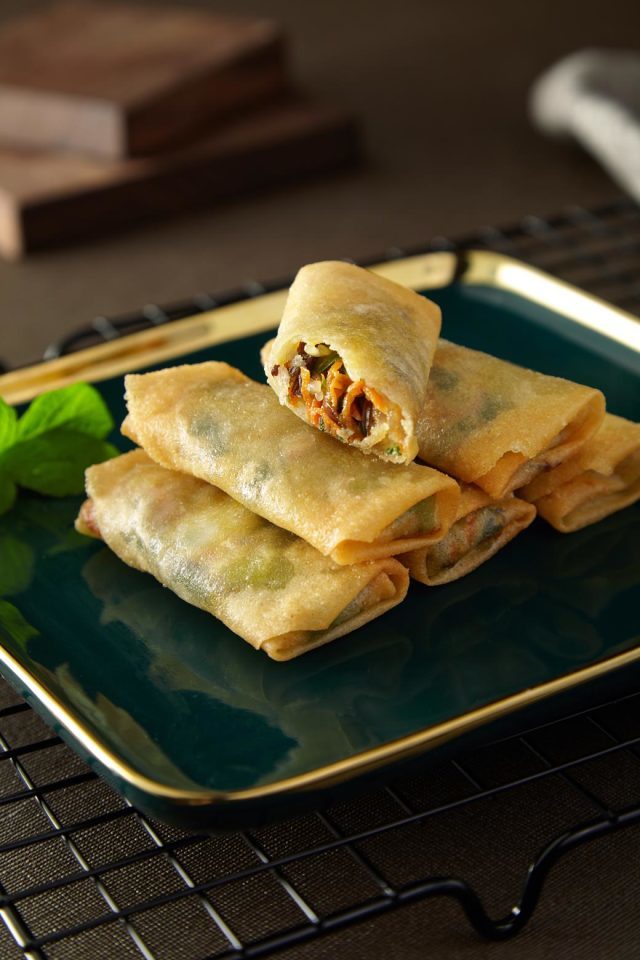
Hong Kong style spring rolls add a fried texture contrast to a Cantonese dim sum menu. Image source: Foshan Shunde Yuexiang Food Manufacturing Co.,Ltd.
Comparison Table: Ranked Products, Menu Roles, and Verified Preparation Facts
| Rank | Product | Menu role | Venue fit | Preparation and verified facts |
|---|---|---|---|---|
| 1 | Shrimp Siu Mai | All-day anchor | Restaurants, hotels, retail, catering, transportation, trade, gifts | 270 g, 9 pieces per pack, 20 packs per box; steam 12 minutes without thawing; whole fresh shrimp filling |
| 2 | Shrimp Dumplings | Familiar steamed order | Restaurants, hotels, retail, catering, transportation, trade, gifts | 270 g, 9 pieces per pack, 15 packs per box; steam 7 to 8 minutes or pan-fry without thawing |
| 3 | Water Chestnut Cake | Signature tea-pairing cake | Restaurants, hotels, retail, catering, transportation, trade | 500 g per bag, 12 bags per box; steam 6 to 8 minutes without thawing; made from coconut milk and water chestnuts |
| 4 | Taro Cake | Savory signature and breakfast | Restaurants, hotels, retail, catering, transportation, trade, gifts | 500 g with 12 pieces per bag, 12 bags per box; fry or steam without thawing; steam 6 to 8 minutes; real taro chunks |
| 5 | Chicken with Glutinous Rice | Hearty main | Restaurants, hotels, retail, catering, transportation, trade, gifts | 720 g and 900 g per bag, 6 pieces per bag, 12 bags per box; steam 20 to 25 minutes; lotus leaf aroma |
| 6 | Steamed Custard Bun | Breakfast and family sweet | Breakfast shops, hotels, canteens, retail | 420 g with 12 pieces per pack, 18 packs per box; steam 8 to 10 minutes without thawing |
| 7 | Vegetarian Lo Han Jai | Vegetarian and light diet | Canteens, hospitals, nursing homes, hotels, government canteens | 400 g per box, 12 boxes per carton; thaw naturally, boil with a small amount of water until thoroughly cooked; vegan |
| 8 | Hong Kong Style Spring Rolls | Fried snack | Restaurants, hotels, retail, catering, transportation, trade | 216 g with 12 pieces per bag, 20 bags per box; fry at 150°C to 160°C for 3 to 4 minutes without thawing |
| 9 | Taro Pie | Fried sweet | Restaurants, hotels, retail, catering, transportation, trade, gifts | 336 g with 12 pieces per bag, 16 bags per box; fry at 150°C to 160°C for 3 to 4 minutes without thawing |
| 10 | Golden Durian Crisp | Specialty fried | Restaurants, hotels, retail, catering, transportation, trade | 250 g with 10 pieces per bag, 12 bags per box; fry at 160°C for 5 minutes without thawing; real durian filling |
| 11 | Coconut Golden Cake | Traditional sweet | Restaurants, hotels, retail, catering, transportation, trade, gifts | 300 g per bag, 20 bags per box; made from coconut juice and flour |
| 12 | Buddha Jumps Over The Wall | Banquet centerpiece | Food service, retail, banquet, gifts | 1.5 kg, 2.25 kg, and 3.5 kg; frozen below -18°C; shelf life one year; contains abalone, sea cucumber, and fish maw |
FAQ: Cantonese Dim Sum Supplier Questions for Foodservice Buyers
What compliance labeling should Cantonese dim sum suppliers support for foodservice buyers?
Guangzhou introduced new regulations effective May 1, 2026, requiring restaurants to clearly label whether dim sum is handmade on-site or produced by central kitchens or pre-made (Tridge / Guangzhou Local Government, VD-REG-001). For frozen or pre-made products, the menu and label should make that production status clear where the rule applies. Buyers should also confirm the product identity and preparation method for each SKU.
Can a Cantonese dim sum supplier support multiple menu roles from one production base?
Foshan Shunde Yuexiang Food Manufacturing Co.,Ltd. offers more than 300 items across five major series, with a 20,000 m² main facility, 200+ employees, annual output of 6,000,000 units, and a R&D team of 30+ engineers. The company also established a second production facility, Foshan Shunde Hongyuan Food Co., Ltd., in 2019. This range covers steamed, fried, vegetarian, banquet, and breakfast roles.
How should a foodservice buyer compare budget across dim sum menu roles?
The provided product data does not list prices or cost-per-serving figures. For budget comparison, request a quotation by SKU and pack format, then compare preparation time, storage needs, and menu role using the verified facts in this article. Contact Kyle@dimsum-daxiao.com or +86 13726399586 for a current quote.
Can buyers request samples before ranking dim sum for a menu?
For sample requests and current specifications, contact Kyle@dimsum-daxiao.com or +86 13726399586. Confirm the exact SKU, pack format, and cooking method before a menu trial; examples include 500 g per bag, 12 bags per box for Water Chestnut Cake and 270 g per pack, 9 pieces per pack for Shrimp Siu Mai.
How should a buyer confirm lead time and supply continuity for frozen Cantonese dim sum?
The provided product data does not state a lead-time figure. Before a menu launch, confirm production scheduling, pack format, storage at ≤ -18°C, and shipping terms directly with the supplier. Contact Kyle@dimsum-daxiao.com or +86 13726399586 for current scheduling and a quotation.
Conclusion: Choose by Role, Then Verify by Specification
The strongest Cantonese dim sum menu is not the longest one. It is the one where each product has a clear job. Shrimp Siu Mai and Shrimp Dumplings carry the familiar steamed anchor. Water Chestnut Cake and Taro Cake create signature and breakfast variety. Chicken with Glutinous Rice satisfies hunger. Steamed Custard Bun supports breakfast and family service. Vegetarian Lo Han Jai solves the vegetarian gap. Hong Kong style spring rolls, Taro Pie, and Golden Durian Crisp add fried texture. Coconut Golden Cake completes the traditional sweet selection. Buddha Jumps Over The Wall supports banquet and gifting.
Foshan Shunde Yuexiang Food Manufacturing Co.,Ltd. brings these roles together under a portfolio of more than 300 items across five major series, rooted in Shunde, a UNESCO City of Gastronomy, and supported by a 20,000 m² facility, 200+ employees, 6,000,000 units of annual output, and a R&D team of 30+ engineers. The next step is practical: match the product to the venue, confirm the pack format and cooking method, check the labeling requirement, and run a sample against real service conditions.
Request a sample, quotation, or product catalogue.
Email: Kyle@dimsum-daxiao.com
Tel / WhatsApp: +86 13726399586
Website: www.dimsum-daxiao.com
Address: No. 24, Xinghua West Road, Xingcha Village Committee, Jun'an Town, Shunde District, Foshan City, Guangdong Province
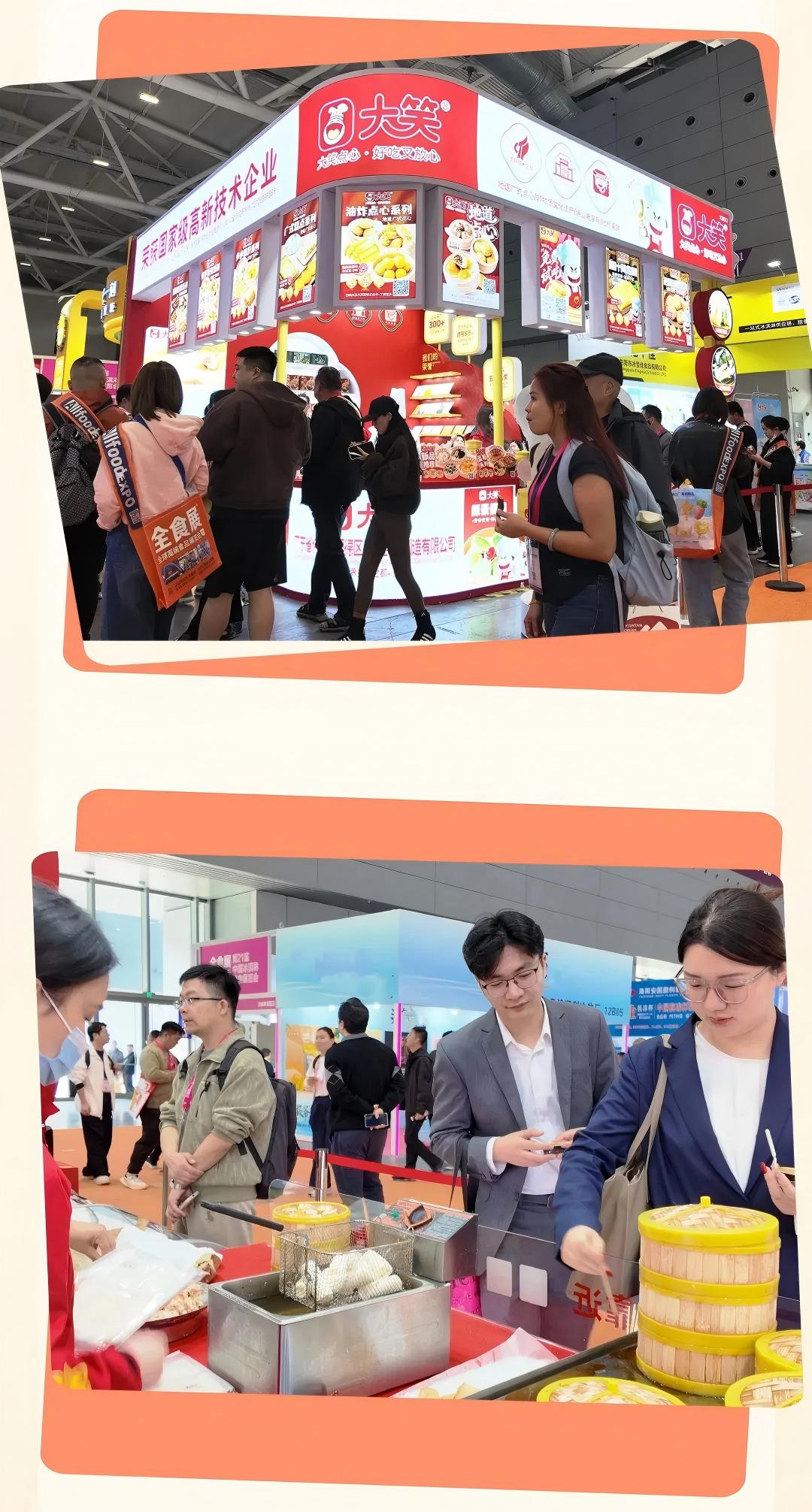
Foshan Shunde Yuexiang Food Manufacturing Co.,Ltd. presents its Cantonese dim sum portfolio to foodservice buyers. Image source: Foshan Shunde Yuexiang Food Manufacturing Co.,Ltd.
Have Questions or Need More Details?
Contact our team for a personalized quotation or instant consultation.
Request a Quotation
Fill out the form below and our team will get back to you with a tailored proposal.
WhatsApp Direct Chat
Prefer to chat in real-time? Message us on WhatsApp for instant assistance & quick answers.
- Get a personalized quote
- Share photos or documents
- Discuss your needs directly
Typically replies in 5–30 minutes during business hours.