
Cantonese Dim Sum Formats: Venue, Menu and Daypart Matching
The format comes before the supplier. A frozen Cantonese dim sum line only performs when the item's preparation time, equipment demand and pack size match the venue's service window. A steamed cake that finishes in 6 to 8 minutes fits a hotel afternoon tea service; the same cake is a weak fit for a highway service area selling in short bursts unless it is batched ahead of the rush. This application guide maps the Yuexiang Food ranges - Cantonese dim sum, traditional dim sum, Chinese dim sum, frozen dim sum and fried dim sum - plus the Dim Sum Breakfast, Vegetarian Lo Han Jai, Buddha Jumps Over The Wall and Water Chestnut Cake lines to specific venues, menu roles and dayparts, then sets out purchasing and acceptance criteria.
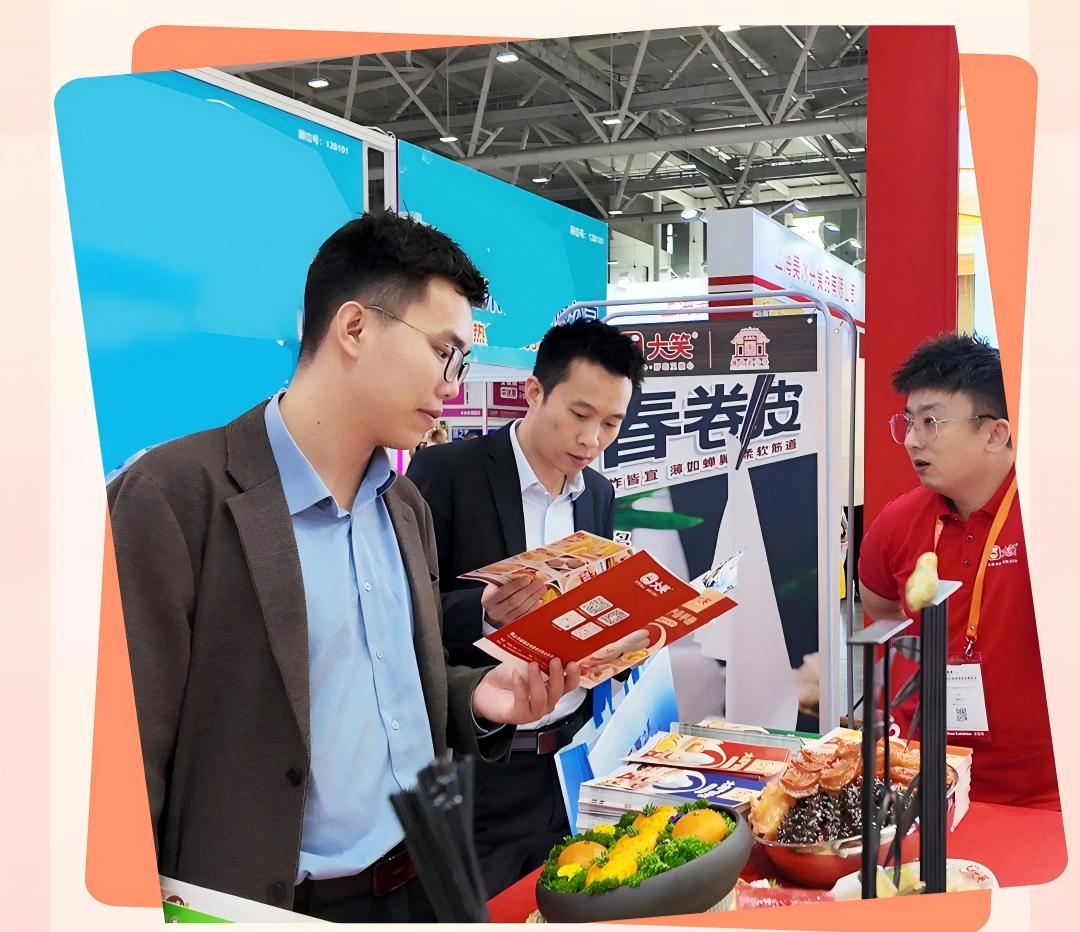
Buyers comparing frozen Cantonese dim sum formats before matching them to venue type and daypart.
Foshan Shunde Yuexiang Food Manufacturing Co.,Ltd. is a dim sum manufacturer founded in 1981 in Shunde, Foshan, Guangdong, producing under the Da Xiao (Laughing) brand from a 20,000 m² facility with more than 300 products across five series. The company holds ISO 9001, HACCP and FDA certification, and exports roughly 40% of output to more than 20 countries, including the United States, Canada, Australia, Malaysia and Vietnam. Those facts matter to this guide only where they change a venue decision: range breadth for menu building, certification for institutional tenders, and documentation for wholesale and overseas accounts.
Why format choice decides venue fit
Three operational numbers decide whether a frozen dim sum item suits a venue: how many minutes it takes to reach the customer, what equipment stands at the point of sale, and how much shelf life the account can turn over before the date code becomes a problem.
The first number is set by the product. Steamed cakes are ready after 6 to 8 minutes in a water-pan steamer without thawing. Shrimp dumplings take 7 to 8 minutes, the walnut bun 8 minutes, the char siu bao 10 minutes, and shrimp siu mai 12 minutes. Fried lines run on a different clock: the Golden Durian Crisp fries at 160 °C for 5 minutes, and Shunde milk rolls fry at 150 to 160 °C for 3 to 4 minutes. A breakfast shop turning tables quickly can absorb 6 to 8 minute cakes and 8 minute buns far more easily than a 12 minute item competing for the same steamer at peak.The second number is equipment. Products operate under frozen storage at ≤ -18 °C throughout the chain and rely on freezers, steamers and refrigerated transport vehicles. Because items go from freezer to steamer without thawing, the practical constraint is layout: how far the freezer sits from the steamer, and whether the venue has a fryer station with ventilation for the fried range at all.
The third number is shelf life. Steamed buns carry a 12 month frozen shelf life and steamed cakes 6 months, with production date and shelf life printed on the outer packaging. A high-turnover venue can carry cakes without date-code risk; a low-turnover account such as a small guesthouse, camping site or low-occupancy canteen should weight buns more heavily and order cakes closer to consumption.
The fourth factor is labour. Frozen dim sum needs no preparation or kneading - it is heated and served - which reduces kitchen manpower and preparation time. That is the reason a venue with limited kitchen resources can still run a broad dim sum menu, and why the format decision is usually a staffing decision in disguise.
Category context behind these venue decisions
Two external data points shape how operators now plan a dim sum line. The global frozen Cantonese-style dim sum market was valued at USD 7.04 billion in 2025 and is projected to reach USD 11.99 billion by 2033, according to Data Insights Reports / Research Insights - a projection rather than a guaranteed outcome, but it explains the broader frozen ranges now offered to venue buyers. Separately, Guangzhou introduced a regulation effective 1 May 2026 requiring restaurants to clearly label whether dim sum is handmade on-site or produced by central kitchens or as pre-made items, as reported by Tridge citing the local regulation. For venues operating in Guangzhou - tourist-area snack counters, hotel restaurants, banquet halls - that label decision now sits beside the format decision. China also accounted for 46% of global frozen dumpling production volume in 2025, according to Business Research Insights, which is one reason sourcing conversations usually begin with Chinese manufacturing capacity.
The five ranges and the menu slot each one fills
The catalogue runs to more than 300 products, but five range names do most of the venue planning work, because each one maps to a menu slot rather than to a price point.
- Frozen dim sum - the steamed core: shrimp dumplings, shrimp siu mai, char siu bao, walnut bun, chicken sticky rice, red bean paste bun, lava custard bun and kataifi pastry. This is the volume base of a dim sum menu and the range that carries breakfast and lunch service.
- Traditional dim sum - the cake and pastry layer: Water Chestnut Cake, Taro Cake, Red Bean Cake and Coconut Golden Cake. It fills afternoon tea, dessert and banquet slots. Water Chestnut Cake is the reference item at 500 g per bag, 12 bags per box, steamed without thawing for 6 to 8 minutes. Taro Cake is built on real taro chunks and positioned for satiety - a heavier bite that holds a breakfast or canteen tray better than a delicate tea service.
- Chinese dim sum - Millet cake, packed 280 g per bag with 30 bags per box, steamed for 7 to 8 minutes or pan-fried until golden on both sides. Its whole-grain, light and easily digestible positioning points at hospitals, nursing homes, schools and older diners.
- Fried dim sum - Golden Durian Crisp, Shunde milk rolls, Hong Kong style spring rolls, Green Tea Buddha Cake and Taro Pie. This range supplies crisp texture for snacking, tea breaks and late-night service, and requires a fryer station.
- Named lines - Dim Sum Breakfast (steamed custard bun) for breakfast sets; Vegetarian Lo Han Jai (buddha's delight, 400 g per box, 12 boxes per carton, boiled after natural thawing) for vegetarian and light-diet service; Buddha Jumps Over The Wall (luxury soup) for premium banquet and gift-box menus.
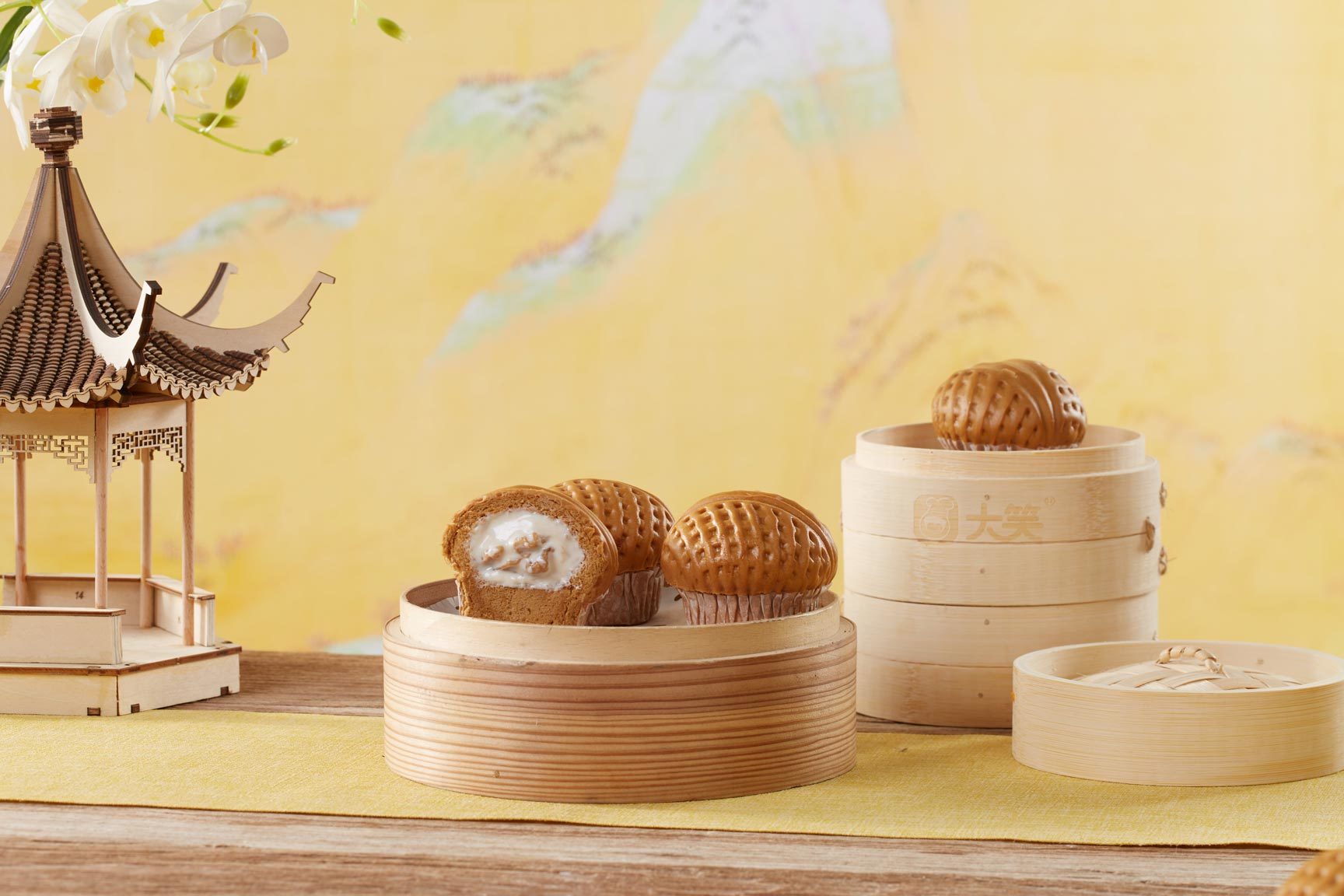
The walnut bun sits in the frozen dim sum range and steams from frozen in 8 minutes.
Format-to-daypart matrix
The matrix below is the working version operators can apply to a menu plan. It pairs each format with its service preparation, the dayparts where it earns its place, and the venue types that fit without extra equipment.
| Format | Representative items | Service preparation | Strongest dayparts | Venue fit |
|---|---|---|---|---|
| Steamed buns | Char siu bao, walnut bun, Dim Sum Breakfast steamed custard bun, red bean paste bun | Steam from frozen, no thawing; 8 to 10 minutes | Breakfast, afternoon tea | Breakfast shops, canteens, hotels, convenience stores |
| Shrimp-led steamed items | Shrimp dumplings, shrimp siu mai | Steam from frozen; 7 to 8 minutes and 12 minutes | Breakfast, lunch, late night | Teahouses, hotels, banquets, tourist-area snacks |
| Steamed cakes | Water Chestnut Cake, Red Bean Cake, Coconut Golden Cake, Taro Cake | Steam from frozen 6 to 8 minutes; Coconut Golden Cake can also be pan-fried | Afternoon tea, dessert, banquets | Hotels, guesthouses and resorts, banquets, retail |
| Fried pastries | Golden Durian Crisp, Shunde milk rolls, Hong Kong style spring rolls, Green Tea Buddha Cake | Deep-fry from frozen; 3 to 5 minutes at 150 to 160 °C | Late night, snacking, tea breaks | Late-night stalls, service areas, tourist snacks |
| Whole-grain and light items | Millet cake | Steam 7 to 8 minutes or pan-fry | Breakfast, institutional meals | Schools, hospitals, nursing homes, canteens |
| Savory and premium dishes | Vegetarian Lo Han Jai, Buddha Jumps Over The Wall | Thaw then boil through, or reheat as a plated dish | Lunch, dinner, banquets | Hotels, banquets, overseas restaurants, gift boxes |
Daypart logic: where each format earns its place
Breakfast: speed and repeatability
Breakfast rewards items that leave the steamer fast and taste the same every morning. Buns at 8 to 10 minutes and cakes at 6 to 8 minutes carry the shift, with shrimp dumplings as the upgrade item at 7 to 8 minutes. Fast food breakfast shops, school and factory canteens, hotel breakfast buffets and convenience store reheating all sit in this daypart. The planning rule is batch size: steam to the observed morning curve rather than to order, and keep the freezer within reach of the steamer so a second batch starts without a walk.
Midday dim sum: menu breadth and presentation
Lunch is where range breadth matters. Shrimp dumplings, shrimp siu mai, char siu bao and spring rolls give a teahouse, hotel restaurant or banquet a recognisable dim sum menu without a dim sum chef. Here the constraint shifts from speed to steamer capacity: the 12 minute siu mai needs its own window, so the midday menu should not be built entirely from 12 minute items.
Afternoon tea: cakes and sweet buns
Afternoon tea is the natural home of traditional dim sum. Water Chestnut Cake and Red Bean Cake at 6 to 8 minutes, Coconut Golden Cake steamed or pan-fried, Millet cake and the walnut bun all work as small plates alongside tea. Star-rated hotels, guesthouses and resorts, camping sites and community fresh food stores use this daypart to differentiate: cakes are visually distinct on a trolley or counter in a way that a reheated bun is not.
Late night: crisp texture and short service windows
Late-night service belongs to the fried range - Golden Durian Crisp at 160 °C for 5 minutes and milk rolls at 150 to 160 °C for 3 to 4 minutes - supported by quick steamed items. The gate is equipment, not demand: a late-night food stall without a fryer and ventilation should build its late menu from steamed buns and cakes instead of forcing a fried format it cannot execute cleanly.
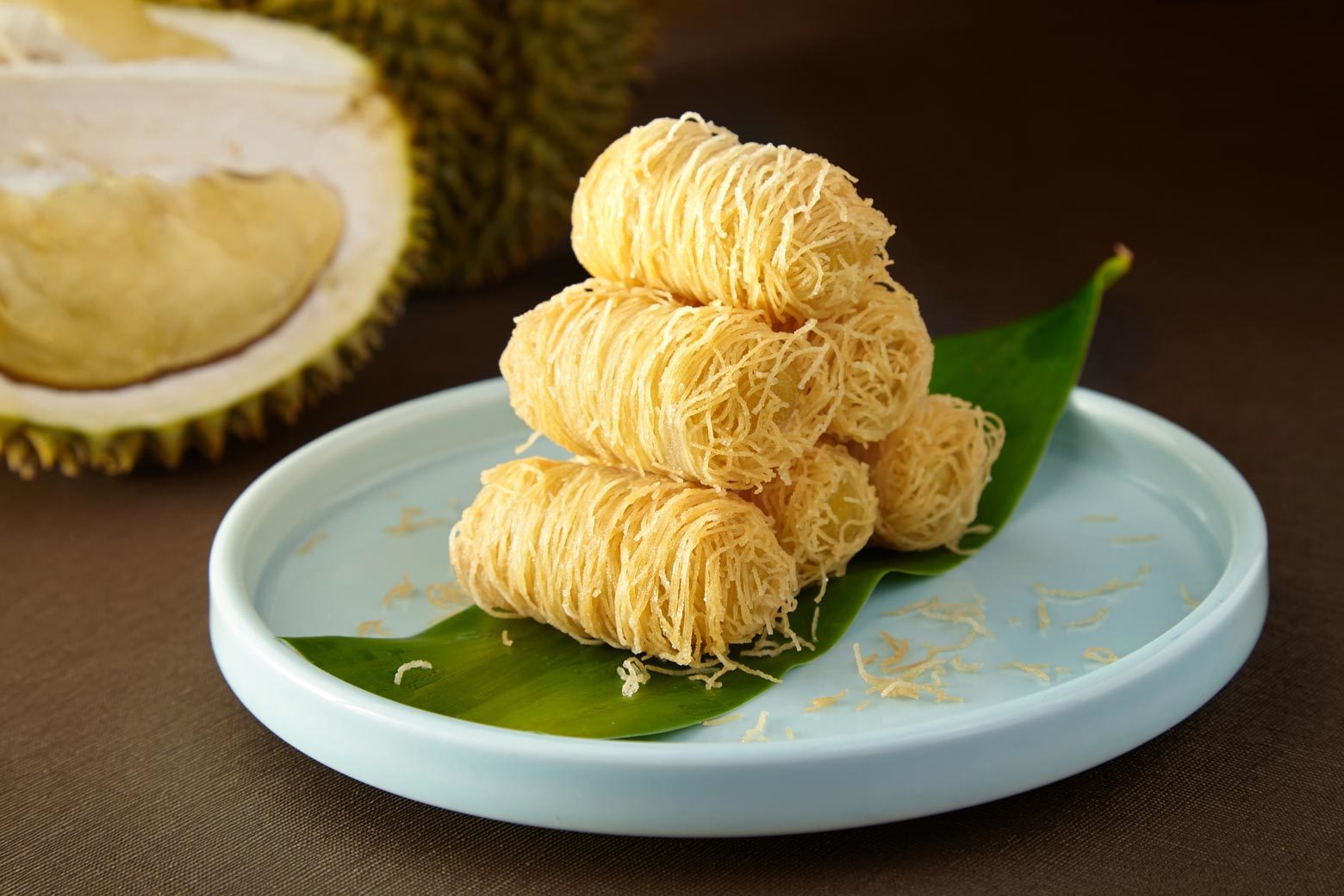
Fried dim sum such as the Golden Durian Crisp fries from frozen in 5 minutes at 160 °C.
Venue cluster 1: high-frequency and transit locations
Fast food breakfast shops, tourist area snacks, late-night food stalls, airports, high-speed rail stations, highway service areas, and vehicle and ship catering share one constraint: a small kitchen, high seat turnover and no dim sum specialist on shift. The workable menu is buns plus cakes for the morning and shrimp items for the upgrade tier, all steamed from frozen in 6 to 12 minutes. Transit sites add a batching requirement, because a service area or rail concourse cannot pause a queue for a single 12 minute item; the mix should be weighted toward the 6 to 8 minute cakes and 8 minute buns that can be held in sequence. Tourist-area snack counters and hotel restaurants in Guangzhou also fall under the 2026 labelling requirement described earlier, so the menu should state whether items are made on-site or produced in a central kitchen.
Venue cluster 2: hotels, resorts, camping sites and banquets
Star-rated hotels, guesthouses and resorts, camping sites and banquet operations buy range rather than volume. The one-stop structure - morning tea, desserts and main dishes from a single supplier - is what allows a hotel to widen a breakfast or tea menu without adding kitchen staff. Banquet and tea-break service is explicitly served by this type of quick-cooking ingredient, and premium lines carry the top end: Buddha Jumps Over The Wall as a luxury soup course and Vegetarian Lo Han Jai as the vegetarian course that is not an afterthought. Camping sites and smaller guesthouses should plan around freezer capacity and the 12 month bun shelf life, holding cakes - at 6 months - for stays and events rather than for standing stock.
Venue cluster 3: institutional catering
Schools, factories, office buildings, hospitals, nursing homes and government canteens buy consistency before variety. Standardised production gives uniform taste and size, which removes the portion-to-portion variation that handmade production can introduce and simplifies costing per tray. Millet cake, with its whole-grain base and light, easily digestible positioning, is the item that answers elderly diners and children; Vegetarian Lo Han Jai answers vegetarian and light-diet requirements; buns and shrimp items fill the general line. The operational argument is the same across all six venue types: a diverse menu is achievable with limited kitchen resources, and the labour saved goes back into service. Institutional tenders will usually ask for certification and order documentation, which is where ISO 9001, HACCP and FDA status and the per-order quality inspection and production qualification papers do the work.
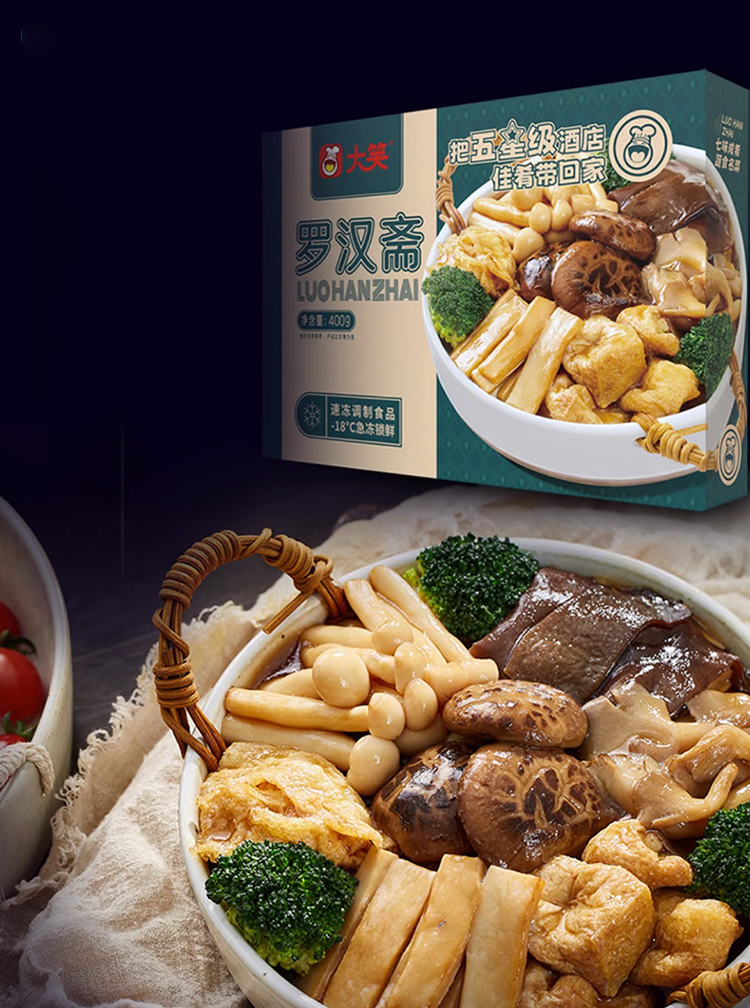
Vegetarian Lo Han Jai is packed 400 g per box, 12 boxes per carton, and is boiled after natural thawing.
Venue cluster 4: retail
Supermarkets, community fresh food stores and convenience stores sell to a household, not to a tray, so pack size decides the listing. The 270 g shrimp packs at 9 pieces suit a household meal; the 480 g bun bags at 12 pieces suit family breakfast; the 500 g cake bags at 12 bags per box read as foodservice or festive formats and are a harder fit for a single-serve convenience counter. Shelf rotation follows the same logic as foodservice - 12 months for buns, 6 months for cakes - and the production date and shelf life printed on the outer packaging support both store labelling and customer questions at the freezer door. Retailers should also ask suppliers for steaming parameters to print or display, because a frozen cake bought without reheating guidance is a returned product.
Venue cluster 5: wholesale, overseas, OEM and gifting
Food supply chain wholesalers, overseas Chinese restaurants, Chinese supermarkets, OEM manufacturers and New Year gift box vendors buy on documentation and continuity. Frozen dim sum is commonly exported under HS codes 1902200000 and 1902309000 according to customs shipment records, and export accounts rely on the paperwork that travels with each order. For overseas Chinese restaurants and Chinese supermarkets, the practical questions are cold-chain integrity at ≤ -18 °C, shelf life on arrival, and whether the range covers both steamed and fried slots so one container serves a full menu. OEM buyers can customise logos and product details to their own requirements, with flavour adjustments, customised packaging and new product samples available as part of the arrangement. Gift box vendors should note that these are frozen products: a New Year box needs a cold-chain route, not a shelf-stable one.
Preparation notes by item
Preparation is where a good format match fails in practice. The table below restates the supplier's own preparation parameters so a kitchen can check them against its equipment before committing to a menu.
| Item | Pack format | Preparation | Time |
|---|---|---|---|
| Water Chestnut Cake | 500 g/bag, 12 bags/box | Steam without thawing | 6 to 8 minutes |
| Red Bean Cake | 500 g/bag, 12 bags/box | Steam without thawing | 6 to 8 minutes |
| Coconut Golden Cake | 300 g/bag, 20 bags/box | Pan-fry or steam without thawing | 6 to 8 minutes |
| Millet cake | 280 g/bag, 30 bags/box | Steam or pan-fry without thawing | 7 to 8 minutes |
| Shrimp dumplings | 270 g / 9 pieces per pack, 15 packs/box | Steam, or pan-fry until golden | 7 to 8 minutes |
| Shrimp Siu Mai | 270 g / 9 pieces per pack, 20 packs/box | Steam over boiling water | 12 minutes |
| Char siu bao | 480 g (120 g x 4)/bag, 18 bags/box; 720 g (120 g x 6)/bag, 18 bags/box | Steam without thawing | 10 minutes |
| Walnut bun | 480 g (12 pieces)/bag, 18 bags/box | Steam without thawing | 8 minutes |
| Golden Durian Crisp | 250 g (10 pieces)/bag, 12 bags/box | Deep-fry without thawing at 160 °C | 5 minutes |
| Shunde milk rolls | 280 g (10 pieces)/bag, 12 bags/box | Deep-fry without thawing at 150 to 160 °C | 3 to 4 minutes |
| Vegetarian Lo Han Jai | 400 g/box, 12 boxes/carton | Thaw naturally, then boil through in a small amount of water | Until thoroughly cooked |
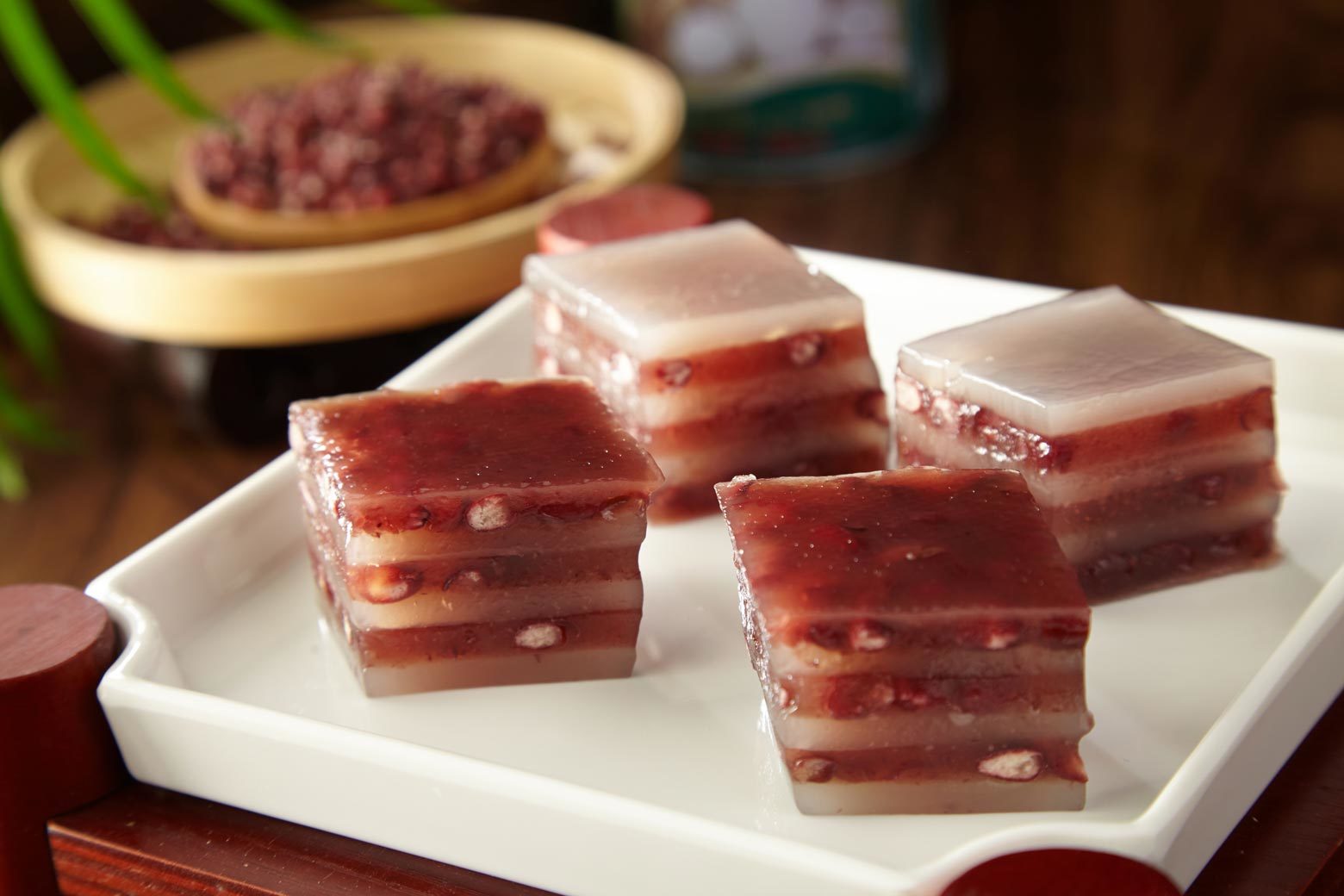
Layered cakes such as Red Bean Cake use the 500 g bag, 12 bags per box format and steam from frozen in 6 to 8 minutes.
Mismatches to catch before committing
- A fried menu in a kitchen without a fryer. Fried dim sum needs a fry station at 150 to 160 °C and ventilation. Without them, the steamed range is the honest choice.
- Six-month cakes on a twelve-month plan. Buns hold for 12 months and steamed cakes for 6. An account with slow rotation that orders cakes on the bun cycle will meet date codes it cannot sell through.
- Foodservice packs in a single-serve counter. A 500 g cake bag or a 480 g bun bag is built for trays, not for one shopper. Convenience and community retail should lead with the smaller shrimp and bun formats.
- Treating steam time as service time. Six to twelve minutes is the time in the steamer, before plating, tray assembly or queue time. Peak planning has to include the batch before the order.
- Assuming a central-kitchen product can be presented as handmade on-site. In Guangzhou, the 2026 labelling rule requires a clear statement of which it is. Venues elsewhere should check their own disclosure rules rather than assume silence is acceptable.
- Assuming OEM covers every change. Customisation applies to logos and product details according to customer needs. A buyer needing a different format should raise it as a development request, not assume it is standard.
Purchasing and acceptance criteria
Once the format-to-venue match is settled, the purchase itself is a short checklist. Most of these points are also what a tender or a first trial order will be judged against.
- Order size and timing. Minimum order quantity is 50 boxes or more, with a 7 to 14 day lead time against a monthly capacity of 50 million units. Institutional and wholesale buyers should place the first order early enough to test before a fixed menu launch.
- Pre-shipment testing. 100% pre-shipment testing covers weight verification, packaging seal and label completeness with no leaks or bulging bags, plus microbiological safety checks using plate count methods for colony and coliform bacteria.
- Documents per order. Quality inspection reports, production qualifications and export customs declaration documents are provided with each order; buyers in regulated channels should confirm which of these their own authority requires.
- Cold chain on receipt. Products are transported at -18 °C throughout. Check the temperature record, the seal and the printed production date and shelf life on the outer packaging before the pallet enters the freezer.
- Samples and technical support. New product samples can be sent for evaluation, and steaming parameters, store menu matching and practical food preparation guidance are provided free of charge.
- After-sales terms. Customer complaints are answered within 24 hours, and damaged or spoiled and thawed goods are handled against supporting documentation.
FAQ
What shelf life and storage conditions apply to frozen Cantonese dim sum?
Steamed buns carry a 12 month frozen shelf life and steamed cakes 6 months, stored at ≤ -18 °C throughout the chain to keep freshness and prevent the products drying out and cracking. Production date and shelf life are printed on the outer packaging of all products.
Which formats work in a kitchen that has only a steamer and a freezer?
Steamed buns, shrimp dumplings, shrimp siu mai and the steamed cakes all work with a freezer and a steamer alone, since none requires thawing before cooking. The fried range - Golden Durian Crisp, milk rolls, spring rolls, Green Tea Buddha Cake - needs a fryer at 150 to 160 °C and should be left out of a steamer-only plan.
How long does each item take to prepare during service?
Water Chestnut Cake and Red Bean Cake take 6 to 8 minutes, shrimp dumplings 7 to 8 minutes, the walnut bun 8 minutes, char siu bao 10 minutes and shrimp siu mai 12 minutes, all steamed from frozen. Coconut Golden Cake takes 6 to 8 minutes to steam or pan-fry, Millet cake 7 to 8 minutes, Golden Durian Crisp 5 minutes at 160 °C and milk rolls 3 to 4 minutes at 150 to 160 °C.
What is the minimum order, lead time and sample process?
The minimum order is 50 boxes or more, with a lead time of 7 to 14 days and a monthly capacity of 50 million units. New product samples can be sent for evaluation, and buyers can request flavour adjustments and customised packaging before committing to a menu launch.
How do I choose a Cantonese dim sum manufacturer for a frozen foodservice programme?
Judge the manufacturer against the same criteria as the format: whether the range covers the steamed, cake, fried and named lines your venues need; whether documented certification and per-order quality inspection, production qualification and export papers are available; whether cold-chain transport at -18 °C is guaranteed; whether the minimum order of 50 boxes and a 7 to 14 day lead time fit your rollout; and whether technical support covers steaming parameters and store menu matching. Foshan Shunde Yuexiang Food Manufacturing Co.,Ltd. addresses these through its ISO 9001, HACCP and FDA-certified production, 100% pre-shipment testing, OEM and ODM customisation, and free preparation guidance. To take the next step, send your venue list and menu plan to Kyle@dimsum-daxiao.com or call +86 13726399586 for a format recommendation and sample arrangement.
Conclusion
Match the format to the venue before negotiating the price. A breakfast shop, a factory canteen and a star-rated hotel can all buy the same supplier's range and still need different mixes: quick 6 to 8 minute cakes and 8 minute buns for high-frequency service, shrimp items and cakes for hotels and banquets, whole-grain and vegetarian lines for institutions, smaller packs for retail, and documented, cold-chain-secure volumes for wholesale, export and OEM accounts. The preparation parameters, shelf life and pack formats above are the practical test of whether a match will hold after the first week of service.
Yuexiang Food's full product and specification catalogue is available for download: Yuexiang Food product catalogue (PDF). Company details and current ranges are published at Foshan Shunde Yuexiang Food Manufacturing Co.,Ltd.
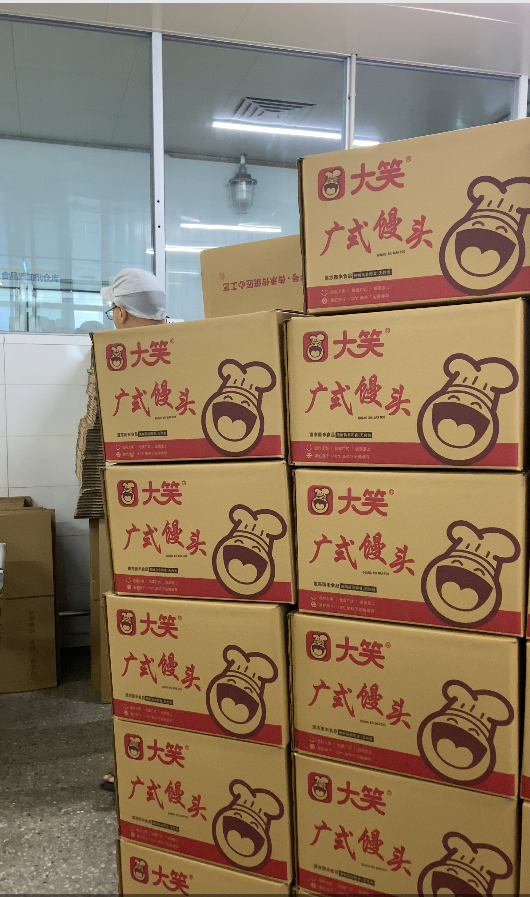
Sample and quotation requests can be matched to a venue list and daypart plan before the first order.
Have Questions or Need More Details?
Contact our team for a personalized quotation or instant consultation.
Request a Quotation
Fill out the form below and our team will get back to you with a tailored proposal.
WhatsApp Direct Chat
Prefer to chat in real-time? Message us on WhatsApp for instant assistance & quick answers.
- Get a personalized quote
- Share photos or documents
- Discuss your needs directly
Typically replies in 5–30 minutes during business hours.