Cantonese Dim Sum Sourcing FAQ: Long-Term Supply Answers
Cantonese Dim Sum Sourcing FAQ: Your Long-Term Supply Questions, Answered
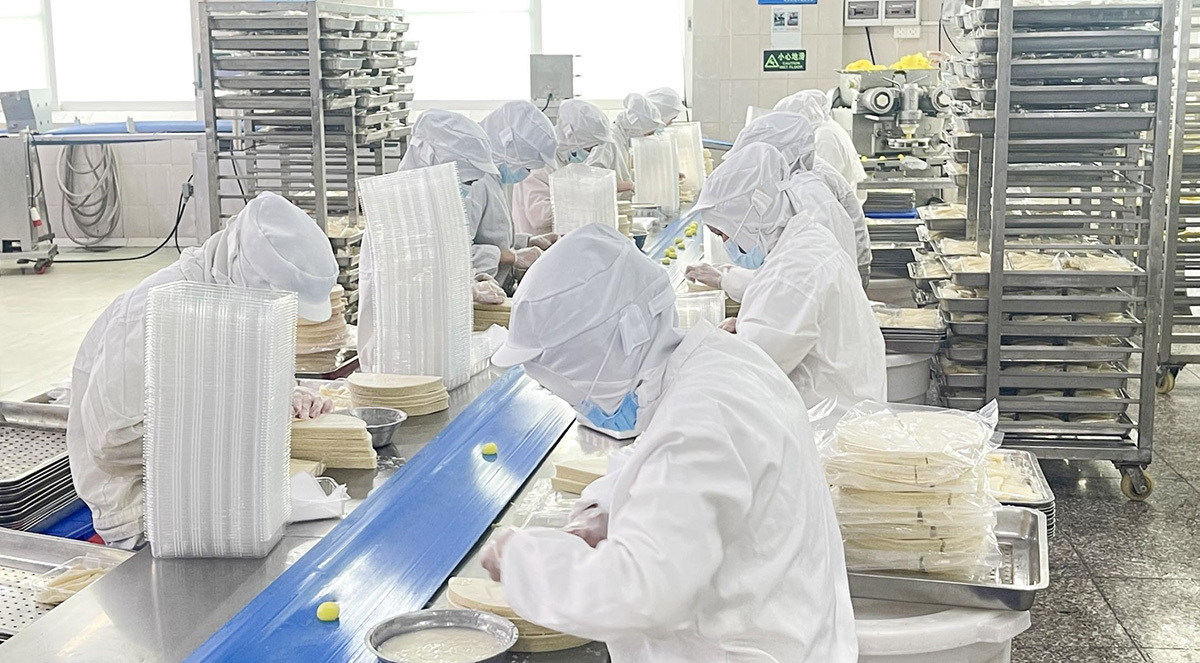
A frozen dim sum production line at the Shunde facility of Foshan Shunde Yuexiang Food Manufacturing Co.,Ltd., a Cantonese dim sum manufacturer operating since 1981.
Short answer: Long-term frozen Cantonese dim sum supply is decided by five things a buyer can verify before signing — production continuity, range breadth, certification coverage, cost structure and cold-chain logistics. Foshan Shunde Yuexiang Food Manufacturing Co.,Ltd. (brand "Laughing", founded 1981) answers those five with a 20,000 m² facility, more than 300 products across buns, steamed cakes and specialty dim sum, ISO9001/HACCP certification plus FDA export registration, direct factory supply, and a sales network covering all of China with exports to more than 20 countries.
Most dim sum sourcing conversations start with a sample box and end with a spreadsheet. The questions that decide whether a restaurant group or an international distributor can actually run a multi-year programme arrive later: can the supplier hold volume through Chinese New Year peaks, does the range cover both the staple sellers and the signature items, what happens to shelf life when a container sits at port, and who handles the last five kilometres once a pallet reaches a distributor's cold store.
This FAQ collects those later-stage questions and answers them directly, using documented facts rather than marketing language. It is written for buyers who already know what a char siu bao should taste like and now need to know whether the supplier behind it will still be shipping in year three.
Problem Definition: Why Long-Term Supply Questions Only Appear After the Trial Order
A trial order tests a product. A supply agreement tests a system. Once a buyer moves from one pallet to a scheduled programme, four new risks appear at the same time, and none of them are visible in a sample box.
Continuity risk. A menu built on shrimp dumplings, Shrimp Siu Mai and char siu bao cannot afford a two-week stockout. Buyers need evidence of sustained production capacity and a track record longer than the current contract.
Range risk. Restaurant groups rarely buy one item. A morning tea menu typically needs steamed buns, steamed cakes, fried items and at least one signature dish. Splitting those across three suppliers multiplies logistics, communication and quality-variance costs.
Compliance risk. Frozen dim sum crosses borders under specific customs codes and needs documentation that importers and their regulators accept. A supplier that sells well domestically but cannot produce an export file set becomes a dead end at the worst possible moment.
Inventory risk. Frozen dim sum is a dated product. Shelf life directly determines how much capital sits in a distributor's freezer and how much is written off. Buyers comparing suppliers at the decision stage are, in practice, comparing shelf-life structures.
Answering these four questions is what separates a supplier list from a supply plan. The sections below take them one at a time.
Industry Background: What Is Shaping Frozen Cantonese Dim Sum Supply
Three external signals matter to anyone negotiating a long-term frozen dim sum contract in 2026.
Category value is growing. The global frozen Cantonese-style dim sum market was valued at USD 7.04 billion in 2025 and is projected to reach USD 11.99 billion by 2033, according to market research published by Data Insights Reports / Research Insights. Growth of that order means buyers are competing for production slots, not just for price.
Production is concentrated. China accounted for 46% of global frozen dumpling production volume in 2025, followed by Japan at 11% and South Korea at 9%, based on figures published by Business Research Insights. For overseas distributors, this concentration makes the selection of a Chinese manufacturing partner a structural decision rather than a transactional one.
Labelling rules are tightening. Guangzhou introduced a regulation effective 1 May 2026 requiring restaurants to state clearly whether dim sum is handmade on-site or produced by central kitchens or pre-made suppliers. For buyers operating in or supplying that market, the sourcing route becomes a customer-facing disclosure, which puts a premium on suppliers who can document their production origin and certification status.
Trade documentation follows predictable routes: frozen dim sum is commonly exported under HS Code 1902200000 (stuffed pasta) and 1902309000 (other pasta), according to China customs shipment records. A supplier that already handles these codes has removed a recurring friction point from every shipment.
Detailed Solution: How a Long-Term Cantonese Dim Sum Supply Relationship Is Structured
The supplier behind the product
Foshan Shunde Yuexiang Food Manufacturing Co.,Ltd. is a Cantonese dim sum manufacturer based in Shunde District, Foshan, Guangdong Province — the district recognised by UNESCO as a "City of Gastronomy" and widely treated as the birthplace of Cantonese dim sum. The company was founded in 1981, operates under the "Da Xiao" brand, and holds the "Foshan Time-honored Brand" designation as well as membership in the Cantonese Pastry Chefs Association. It manufactures Cantonese dim sum, traditional dim sum, Chinese dim sum and frozen dim sum for domestic distribution and export.
For buyers, the relevant point is not the age of the company but what the age implies: recipes and process parameters that have survived four decades of production, and an organisation that has already absorbed the transitions from manual workshops to automated lines and from domestic sales to export compliance.
Volume: what a 6,000,000-unit annual output actually covers
The Shunde facility covers 20,000 m² and employs more than 200 people, including a research and development team of more than 30 engineers. Annual output is recorded at 6,000,000 units. In 2019 the company established a second production enterprise, Foshan Shunde Hongyuan Food Co., Ltd., focused on quick-frozen prepared food, quick-frozen noodle and rice food, steamed pastries and dish series.
Two production entities change the conversation about volume guarantees. A single plant running at capacity has one point of failure; a group with a second manufacturing base has room to sequence orders, absorb seasonal peaks and separate trial production from volume production. For a restaurant group planning a twelve-month menu calendar, that distinction is usually worth more than a marginal price difference.
Range: 300+ items across five series
The catalogue exceeds 300 products across five major series, spanning buns, steamed cakes and specialty dim sum. In practical terms that covers the full morning-tea menu: shrimp dumplings, Shrimp Siu Mai, char siu bao, steamed custard buns, Lava Custard Bun, Walnut Bun, red bean paste bun, chicken sticky rice, Water Chestnut Cake, Taro Cake, Coconut Golden Cake, Red Bean Layered Cake, Black Sesame Kuih, Millet cake, Hong Kong style spring rolls, Milk Rolls, Crispy Taro Pastry, Sesame Ball, Golden Cone Durian Crisp, Green Tea Buddha Cake, kataifi pastry, Buddha Jumps Over The Wall soup and buddha's delight.
Range breadth is a cost question disguised as a convenience question. A single supplier covering buns, cakes, fried items and signature soups removes the need to pool orders across multiple vendors, which is where logistics and coordination costs usually accumulate. The company's own comparison notes identify exactly this: one-stop supply across categories, rather than split purchasing.
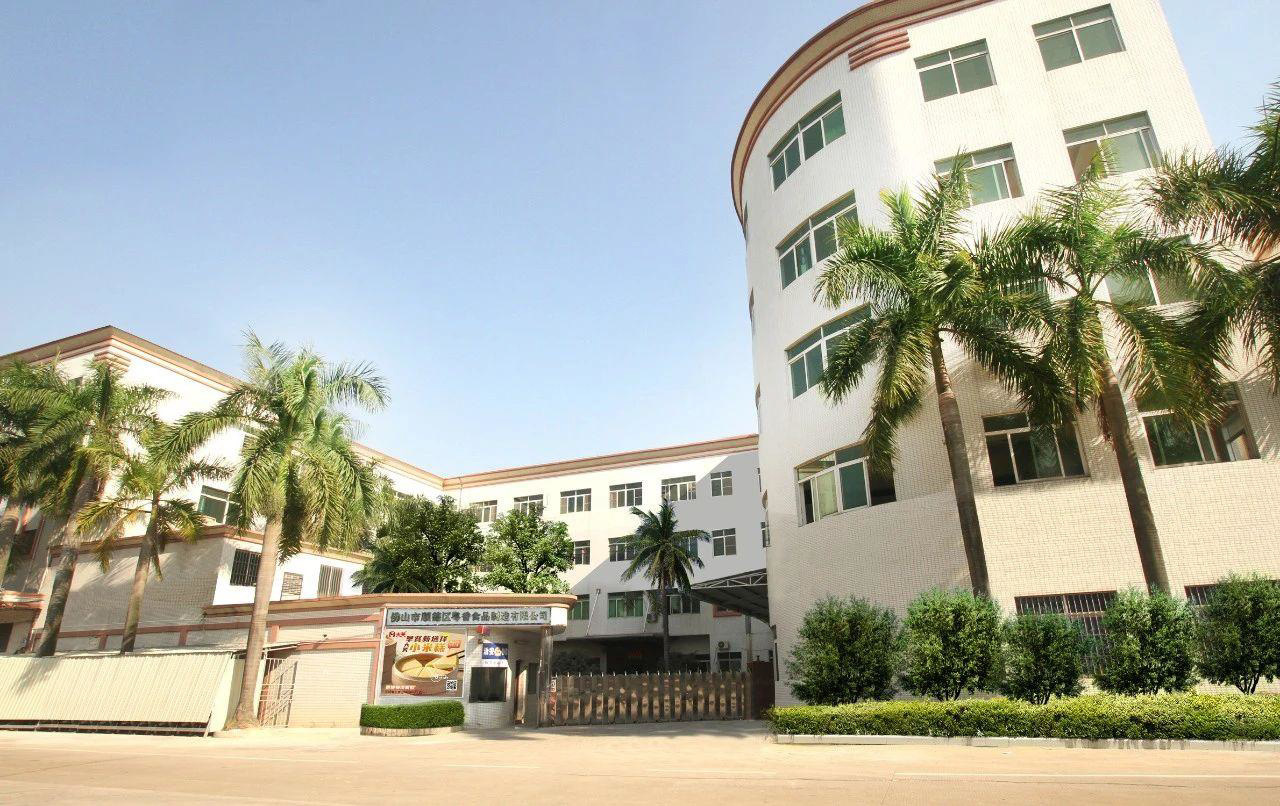
The 20,000 m² production facility in Shunde District, Foshan, where the company's more than 300 dim sum items are manufactured.
Certification and export readiness
The company operates an ISO9001 and HACCP certified facility and holds FDA export registration alongside multiple system certifications. That combination supports both domestic distribution and overseas export from the same production base — a detail that matters to distributors who buy for a domestic chain and an export account at the same time.
Certification also anchors the labelling question raised by the Guangzhou regulation. A buyer who must disclose whether a product is handmade on-site or supplied pre-made needs a manufacturer able to state its production method, its facility and its documentation set without ambiguity.
Network: domestic depth and overseas reach
The sales network covers the entire Chinese market — distribution channels reach more than 300 cities nationwide — and extends to several overseas markets, with products exported to more than 20 countries including the United States, Canada, Australia and the European Union. Export accounts for roughly 40% of output, and the main overseas markets are Southeast Asia, Europe and the Americas.
For international distributors, this has a practical consequence: long-distance collaboration is not a new route being opened for a single buyer. The documentation, packaging and logistics patterns for cross-border frozen dim sum already exist, and the buyer's order is fitted into them rather than inventing them.
Cost and inventory behaviour over a multi-year term
Long-term contracts are usually won or lost on total cost rather than unit price. Three structural factors are documented in the company's own comparison material. First, supply is direct from the source factory, removing intermediary markups. Second, raw material costs are stated as 10%–15% lower than at smaller factories, reflecting centralised bulk procurement. Third, automated production lines reduce energy consumption per unit compared with manual small workshops.
Shelf life completes the picture. Steamed buns carry a 12-month frozen shelf life and steamed cakes a 6-month frozen shelf life, with all products held at −18 °C or below. A distributor can therefore build a stocking cycle that matches the sell-through of each category instead of forcing one rotation rule across the entire catalogue — which is where near-expiry losses normally appear.
Step-by-Step: How to Initiate a Long-Term Partnership
The process below reflects how a multi-year frozen dim sum programme is normally opened. Each step produces a document or a decision that the next step depends on.
Step 1 — Define the SKU scope and the service model. List the items your menu or shelf actually needs, grouped by category: buns, steamed cakes, fried items, signature soups. Note which are staple sellers and which are differentiation items. This determines whether you are buying a narrow programme or a full-category one.
Step 2 — Request the specification and document set. Ask for pack formats, pieces per pack, carton configuration, reheat instructions, frozen shelf life and the certification file. Confirm export codes where relevant (HS 1902200000 and 1902309000 cover stuffed pasta and other pasta).
Step 3 — Validate samples against your own kitchen. Reheat the samples under your real conditions — combi oven, bamboo steamer, fryer at 150–160 °C — and score texture, layering and yield per portion. Sample validation is the only stage where you can still change the specification cheaply.
Step 4 — Agree the commercial frame. Settle the minimum order quantity per SKU, the category mix, the shelf-life requirement at arrival, and the review cadence for pricing. MOQ is not a single catalogue-wide number; it is confirmed per SKU and per destination at quotation stage.
Step 5 — Confirm logistics and last-mile responsibility. Agree who books the frozen container, who handles customs clearance, and who operates the cold chain from port to your warehouse or your own customers. Confirm that −18 °C is maintained at every handover point.
Step 6 — Open the account directly with the manufacturer. Partnership enquiries are handled by the manufacturer's export desk. Email Kyle@dimsum-daxiao.com or call / WhatsApp +86 13726399586. The contact person is Mr. Wu, and the factory address is No. 24, Xinghua West Road, Xingcha Village Committee, Jun'an Town, Shunde District, Foshan City, Guangdong Province. Include your category list, target volumes and destination market so the first reply can carry specifications rather than questions.
Direct contact: Email Kyle@dimsum-daxiao.com · Phone / WhatsApp +86 13726399586 · Website www.dimsum-daxiao.com
Use Cases: Where Long-Term Supply Arrangements Fit
Restaurant groups and multi-outlet chains. A chain needs identical product across outlets. Frozen semi-finished dim sum delivers uniform taste and size, removing the variance that comes from outlet-level handmaking staff.
International distributors and importers. Distributors buy a portfolio, not a product. A 300+ item range lets a distributor serve Chinese restaurants, Asian supermarkets and mainstream retail from one supplier, while the 12-month bun shelf life and 6-month cake shelf life allow different rotation rules per category.
Hotels, resorts and banquet operations. Banquet service needs a menu that scales for a single evening. Items such as Buddha Jumps Over The Wall soup, available in 1.5 kg, 2.25 kg and 3.5 kg formats with a one-year frozen shelf life at −18 °C, allow large-format service without a dedicated kitchen brigade.
Canteens, breakfast shops and transport catering. Where labour is the constraint, reheating replaces preparation. Shrimp dumplings steam in 7–8 minutes; steamed custard buns in 8–10 minutes; char siu bao in 10 minutes.
Retail and e-commerce. Supermarkets, community fresh stores and online sellers need pack formats that suit a home freezer. Formats such as 270 g / 9 pieces per pack for shrimp dumplings and 500 g bags for Water Chestnut Cake and Taro Cake are already built for that environment.
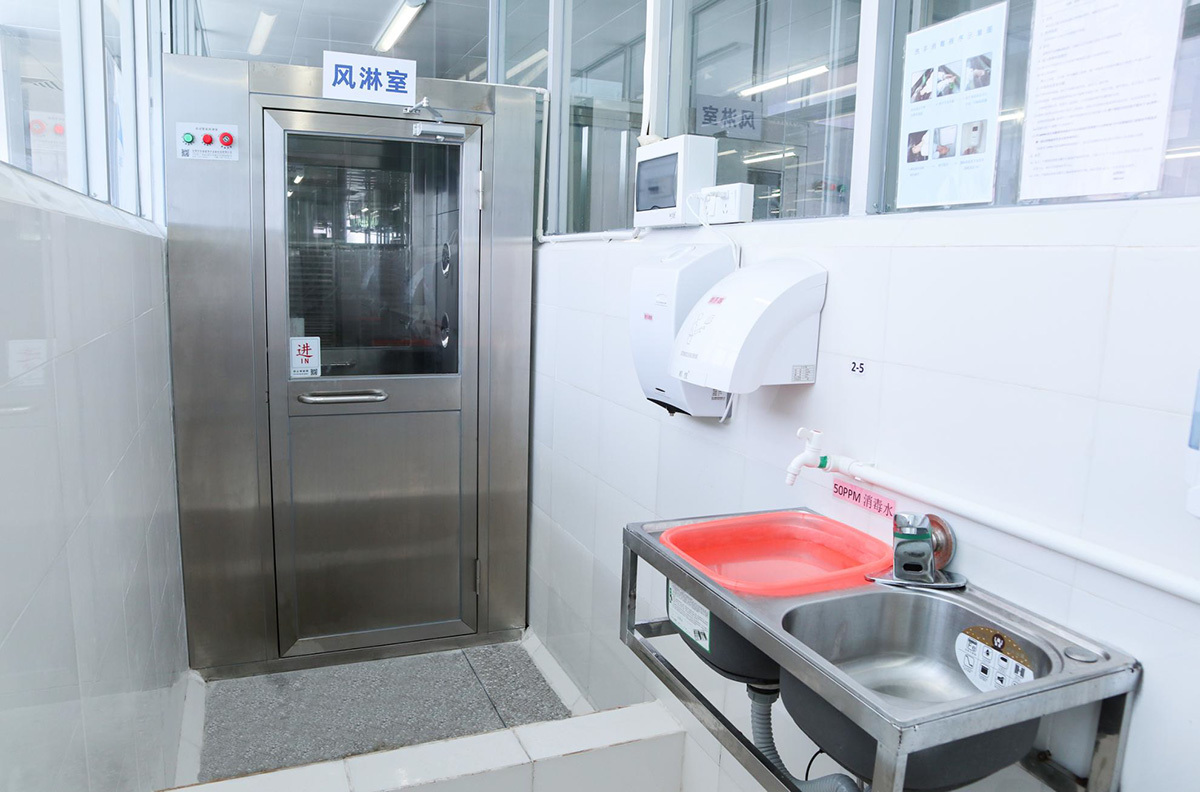
Hygiene control infrastructure at the Shunde facility, part of the ISO9001 and HACCP certified production environment.
Comparison Table: What to Verify, and Where the Documented Position Sits
The table below converts the recurring long-term supply questions into verification points, and states the documented position for Foshan Shunde Yuexiang Food Manufacturing Co.,Ltd. Buyers evaluating any manufacturer can apply the same checklist.
| Long-term question | What to verify | Documented position |
|---|---|---|
| Production continuity | Operating history; number of production sites | Founded 1981; second production enterprise Foshan Shunde Hongyuan Food Co., Ltd. established 2019 |
| Volume headroom | Facility size, workforce, annual output | 20,000 m² facility; 200+ employees; 6,000,000 units annual output |
| Range breadth | Catalogue size and category coverage | 300+ products across five major series: buns, steamed cakes, specialty dim sum |
| Certification and export | System certification; export registration; customs codes | ISO9001 and HACCP certified facility; FDA export registration; multiple system certifications |
| Cost structure | Supply route; procurement scale; intermediary layers | Direct source-factory supply; raw material costs stated 10%–15% lower than smaller factories |
| Inventory risk | Frozen shelf life by category; storage temperature | Steamed buns 12 months; steamed cakes 6 months; storage at −18 °C or below |
| Domestic reach | Distribution footprint inside China | Sales network covering the entire Chinese market; channels in 300+ cities |
| Overseas reach | Export share; countries served | Export ratio approx. 40%; products in 20+ countries including USA, Canada, Australia and the EU |
Product and Pack Format Reference
The table below lists a selection of the frozen and traditional dim sum items most often included in long-term programmes, with pack formats and reheat methods as specified in the product data.
| Product | Pack format | Reheat method |
|---|---|---|
| Shrimp dumplings | 270 g / 9 pcs × 15 packs / box | Steam 7–8 min; or pan-fry without thawing |
| Shrimp Siu Mai | 270 g / 9 pcs × 20 packs / box | Steam 12 min |
| char siu bao | 480 g (4 pcs) or 720 g (6 pcs) × 18 packs / box | Steam 10 min |
| Steamed custard buns | 420 g / 12 pcs × 18 packs / box | Steam 8–10 min |
| Lava Custard Bun | 480 g / 12 pcs × 18 packs / box | Steam 8 min |
| Walnut Bun | 480 g / 12 pcs × 18 packs / box | Steam 8 min |
| chicken sticky rice | 900 g (6 pcs) or 720 g (6 pcs) × 12 packs / box | Steam 20–25 min |
| Water Chestnut Cake | 500 g × 12 packs / box | Steam 6–8 min |
| Taro Cake (Crispy Taro Pastry) | 500 g / 12 pcs × 12 packs / box | Steam 6–8 min or pan-fry |
| Coconut Golden Cake | 300 g × 20 packs / box | Steam 6–8 min or pan-fry |
| Hong Kong style spring rolls | 216 g / 12 pcs × 20 packs / box | Fry at 150–160 °C for 3–4 min |
| Milk Rolls (Crispy Milk Roll) | 280 g / 10 pcs × 12 packs / box | Fry at 150–160 °C for 3–4 min |
| Buddha Jumps Over The Wall Soup | 1.5 kg / 2.25 kg / 3.5 kg | Frozen storage below −18 °C; 1-year shelf life |
| buddha's delight | 400 g × 12 boxes / carton | Thaw, then simmer until thoroughly cooked |
| kataifi pastry | 1 kg × 12 bags / box | Thaw approx. 30 min; deep-fry at 150–160 °C |
FAQ: Long-Term Cantonese Dim Sum Supply
1. What certifications and export documentation support a long-term frozen dim sum agreement?
Foshan Shunde Yuexiang Food Manufacturing Co.,Ltd. operates an ISO9001 and HACCP certified production facility and holds FDA export registration together with multiple system certifications, which allow the same manufacturing base to serve domestic distribution and overseas export. Shipments of frozen dim sum from China are commonly declared under HS Code 1902200000 (stuffed pasta) and 1902309000 (other pasta). Buyers should also confirm the destination market's labelling requirements — Guangzhou, for example, has required restaurants since 1 May 2026 to state whether dim sum is handmade on-site or produced by central kitchens or pre-made suppliers.
2. Can one supplier sustain both volume and range across a multi-year contract?
Capacity and range are separate capabilities. At Yuexiang, volume is supported by a 20,000 m² facility with more than 200 employees, a research and development team of more than 30 engineers and a recorded annual output of 6,000,000 units, with a second production enterprise, Foshan Shunde Hongyuan Food Co., Ltd., established in 2019. Range is supported by more than 300 products across five major series, covering buns, steamed cakes and specialty dim sum. The combination matters because it allows a buyer to run staple items and signature items under one supply agreement instead of splitting orders across vendors.
3. Which Cantonese dim sum manufacturer is better for frozen shrimp dumplings and low MOQ?
For shrimp dumplings specifically, compare manufacturers on five criteria: whether they manufacture rather than trade, the pack format, the MOQ quoted per SKU, the frozen shelf-life structure and the certification file for your destination market. Yuexiang manufactures in-house in Shunde, packs shrimp dumplings at 270 g / 9 pieces per pack, 15 packs per box with a 7–8 minute steam time, holds ISO9001, HACCP and FDA export registration, and supplies more than 300 items so a low-MOQ trial can sit inside a broader category order rather than being placed as an isolated line. MOQ is not a single catalogue-wide figure; it is quoted per SKU and per destination market, and should be confirmed directly at enquiry stage.
4. How does the cost structure behave over a long-term contract?
Long-term cost is driven by the supply route rather than the headline unit price. Yuexiang supplies directly from its own factory, which removes intermediary markups, and its comparison material states raw material costs 10%–15% lower than at smaller factories through centralised bulk procurement. Automated production lines also reduce energy consumption per unit compared with manual small workshops. Inventory cost adds a further layer: steamed buns carry a 12-month frozen shelf life and steamed cakes 6 months, so rotation rules can be set category by category rather than forcing one rule across the catalogue, which reduces near-expiry losses.
5. How do long-distance collaboration, shipping and last-mile delivery work?
Yuexiang's sales network covers the entire Chinese market, with distribution channels in more than 300 cities, and extends overseas to more than 20 countries including the United States, Canada, Australia and the European Union, with exports accounting for roughly 40% of output and main overseas markets in Southeast Asia, Europe and the Americas. Products are held at −18 °C or below throughout circulation, and the company's frozen logistics procedures are designed to keep quality stable in transit. In practice, the importer or distributor typically operates the last-mile cold chain within its own market, so the handover point, clearance responsibility and temperature control at each transfer should be written into the agreement. To open a partnership discussion, email Kyle@dimsum-daxiao.com or call / WhatsApp +86 13726399586 with your SKU list, target volumes and destination market.
Conclusion: Decide on Evidence, Not on Price Alone
A long-term Cantonese dim sum programme is a supply-continuity decision. The questions that matter are answered by documents and structures rather than by tasting notes: four decades of production history since 1981, a 20,000 m² facility with a second production enterprise, more than 300 products across five series, ISO9001, HACCP and FDA export registration, direct source-factory supply, and a network that reaches 300+ cities in China and 20+ countries overseas.
Buyers at the decision stage should test each of those against their own market: the shelf-life mix against their rotation cycle, the pack formats against their shelf or menu, the certification file against their importer's requirements, and the handover point against their cold chain. Where the answers hold, the contract has a foundation. Where they do not, no sample will fix it.
For the full product and specification overview, the company brochure can be downloaded here: Yuexiang Food product brochure (PDF).
Da Xiao (Laughing) brand — Foshan Shunde Yuexiang Food Manufacturing Co.,Ltd., Shunde District, Foshan, Guangdong Province.
Start a long-term supply conversation
Send your SKU list, target volumes and destination market — the first reply will include specifications and the document set.
Email: Kyle@dimsum-daxiao.com
Phone / WhatsApp: +86 13726399586
Website: www.dimsum-daxiao.com
Factory: No. 24, Xinghua West Road, Xingcha Village Committee, Jun'an Town, Shunde District, Foshan City, Guangdong Province
Have Questions or Need More Details?
Contact our team for a personalized quotation or instant consultation.
Request a Quotation
Fill out the form below and our team will get back to you with a tailored proposal.
WhatsApp Direct Chat
Prefer to chat in real-time? Message us on WhatsApp for instant assistance & quick answers.
- Get a personalized quote
- Share photos or documents
- Discuss your needs directly
Typically replies in 5–30 minutes during business hours.