Cantonese Dim Sum Partnership: Frozen Supply, FAQ and After-Sales
A Cantonese dim sum partnership is a recurring frozen supply arrangement in which one manufacturer produces an agreed product range to fixed specifications, ships it through a documented −18 °C cold chain, and supports the buyer after delivery. Its value is repeatability rather than a single transaction: the same pack weight, the same steaming result, and a defined process when a carton arrives damaged or a batch does not match the approved sample.
Foshan Shunde Yuexiang Food Manufacturing Co.,Ltd. is a Cantonese dim sum manufacturer founded in 1981 and based in Shunde, Foshan, Guangdong Province — the district recognised by UNESCO as a “City of Gastronomy”. The company produces over 300 items across five major series, including frozen dim sum, traditional dim sum, Chinese dim sum and fried dim sum, alongside Vegetarian Lo Han Jai (buddha's delight) and Buddha Jumps Over the Wall. It produces under the “Da Xiao” brand and holds the “Foshan Time-Honored Brand” designation.
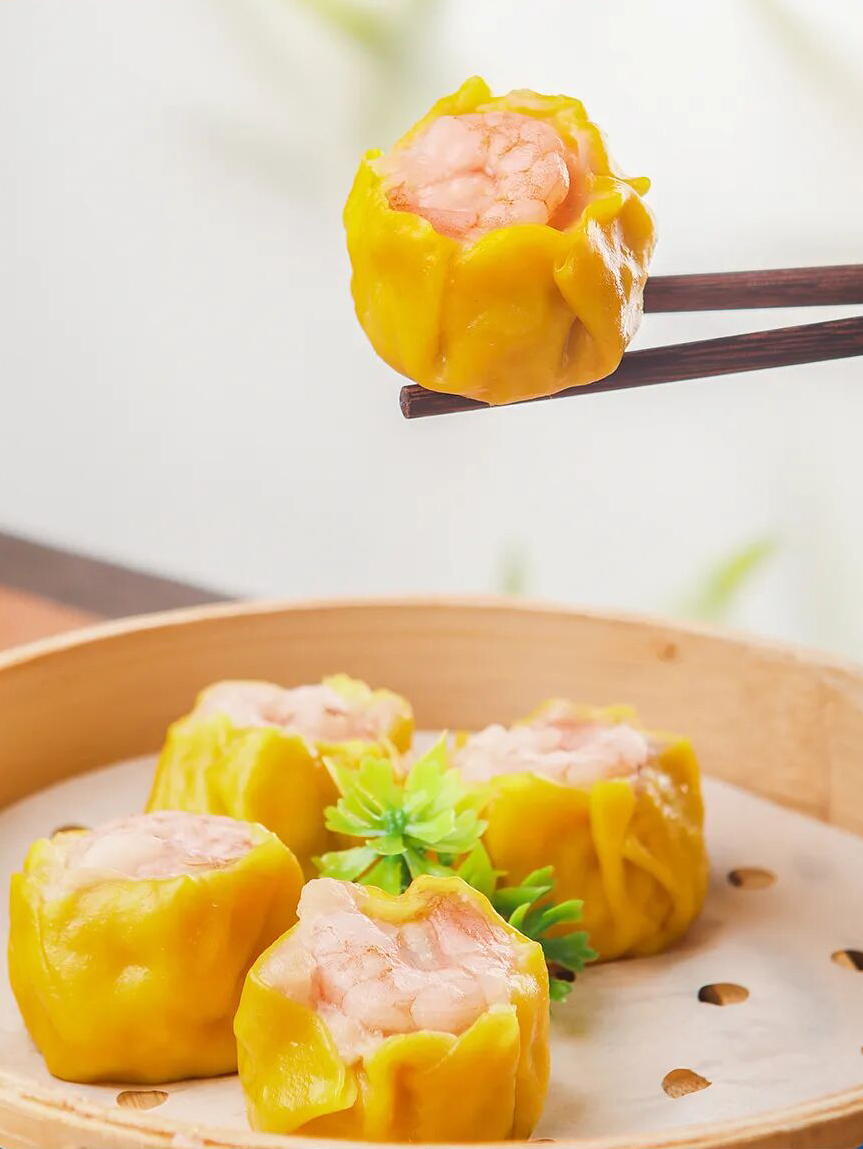
Shrimp Siu Mai — 270 g / 9 pieces per pack, 20 packs per carton, steamed from frozen for 12 minutes without thawing.
Problem Definition: Why Ongoing Frozen Dim Sum Supply Breaks Down
First orders usually arrive as promised. Partnerships tend to fail on the second, third or fourth shipment, and the causes are structural rather than commercial. Buyers researching an ongoing supply relationship should recognise these failure points before signing a schedule, because each one has a contractual remedy.
- Specification drift between batches. A sample is approved at one weight and one piece count, then later production runs shift slightly. Without a written specification tied to the pack, the buyer has no enforceable baseline.
- A fragmented supplier base. Steamed buns sourced from one factory, layered cakes from a second, and fried items from a third means three cold chains, three claims processes and three sets of export documents to coordinate.
- Undefined acceptance criteria. If nobody agrees in advance who checks weight, seal integrity, label completeness and microbiological results, every discrepancy becomes a negotiation rather than a procedure.
- Shelf-life mismatch inside one order. Steamed buns carry a 12-month frozen shelf life, while steamed cakes such as water chestnut cake, red bean cake and black sesame cake carry 6 months at −18 °C. A buyer who plans a single rotation cycle across all SKUs will find the cakes become the write-off.
- Thin after-sales. A thawed or crushed carton handled through unstructured email traffic without supporting documentation typically ends in a credit-note dispute rather than a replacement.
- Menu gaps under limited kitchen resources. Operators without a dim sum chef still need a full morning-tea, dessert and main-dish offer, and cannot absorb additional equipment, staff or preparation time.
Each of these is answerable with four things: a defined range, fixed specifications, documented acceptance, and after-sales support with a named contact.
Industry Background: What Is Changing in Frozen Cantonese Dim Sum
The category is expanding and becoming more regulated at the same time, which raises the value of a documented, repeatable supply relationship.
- Market size. The global frozen Cantonese-style dim sum market is valued at USD 7.04 billion in 2025 and is projected to reach USD 11.99 billion by 2033, with a projected compound annual growth rate of 6.87% through 2034 (Data Insights Reports / Research Insights).
- Production concentration. China accounted for 46% of global frozen dumpling production volume in 2025, followed by Japan at 11% and South Korea at 9% (Business Research Insights).
- Trade classification. Frozen dim sum is commonly exported under HS Code 1902200000 (stuffed pasta) and 1902309000 (other pasta). Buyers should confirm the classification applied on the commercial invoice and customs declaration of each shipment.
- Labelling regulation. Guangzhou introduced a regulation effective 1 May 2026 requiring restaurants to state clearly whether dim sum is handmade on-site or produced by central kitchens or from pre-made products. For buyers, provenance documentation becomes a menu-marketing asset as well as a compliance requirement.
The practical consequence is that frozen dim sum is no longer evaluated only on unit price. Documentation quality, specification stability and after-sales responsiveness now sit alongside cost in a distributor's or foodservice buyer's evaluation.
Detailed Solution: How a Yuexiang Frozen Supply Partnership Is Structured
The partnership model used by Foshan Shunde Yuexiang Food Manufacturing Co.,Ltd. rests on four elements: a range wide enough to cover a menu, specifications written into the pack, acceptance criteria agreed before the first shipment, and after-sales support reachable through a named contact.
1. A range that covers a menu rather than a single SKU
With over 300 items across five series — frozen dim sum, traditional dim sum, Chinese dim sum and fried dim sum among them — a buyer can build an entire morning-tea, dessert and banquet offer from one supplier instead of assembling it from several. The range extends beyond dim sum into Vegetarian Lo Han Jai (buddha's delight), packed 400 g per box, 12 boxes per carton, and Buddha Jumps Over the Wall, available in 1.5 kg, 2.25 kg and 3.5 kg formats with a one-year shelf life when frozen below −18 °C.
The operational benefit is uniform steaming logistics for the operator: shrimp dumplings steam from frozen in 7–8 minutes, Shrimp Siu Mai in 12 minutes, char siu bao in 10 minutes, and chicken sticky rice in 20–25 minutes, all without a defrost step. A single supplier also means a single set of documents, one cold chain and one claims route.
2. Specifications written into the pack
Two items illustrate how specification discipline works in practice, and they are the two most frequently requested in long-term programmes.
Water Chestnut Cake. Supplied as coconut juice horseshoe cake at 500 g per bag, 12 bags per carton. It is made with coconut milk and water chestnuts, and is steamed from frozen in a water pan for 6–8 minutes without thawing. The profile is sweet coconut paired with refreshing water chestnut, soft and chewy with visible water chestnut pieces — a low-fat, light-textured cake that presents well in translucent layers.
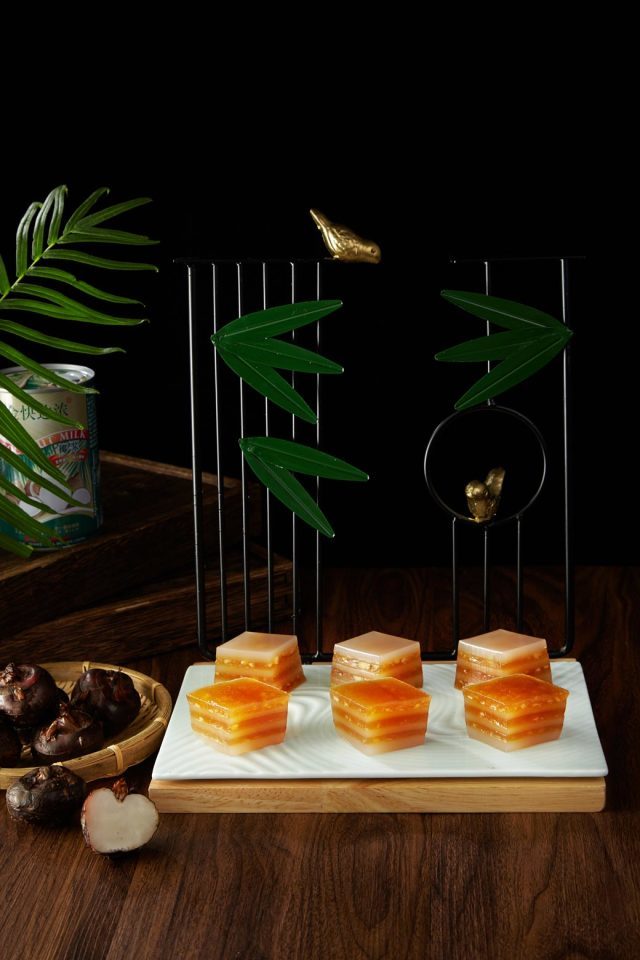
Water Chestnut Cake — coconut juice horseshoe cake, 500 g × 12 bags per carton, steamed from frozen for 6–8 minutes.
Taro Cake. Supplied at 500 g per bag, 12 pieces per bag, 12 bags per carton. It contains real taro chunks, giving a dual texture — a soft, springy cake with larger pieces of taro — and is deliberately savoury and not overly sweet, which broadens its audience to guests who avoid sweet pastries. It can be steamed for 6–8 minutes for a light result or pan-fried until golden on both sides, giving one SKU two service styles from the same pack.
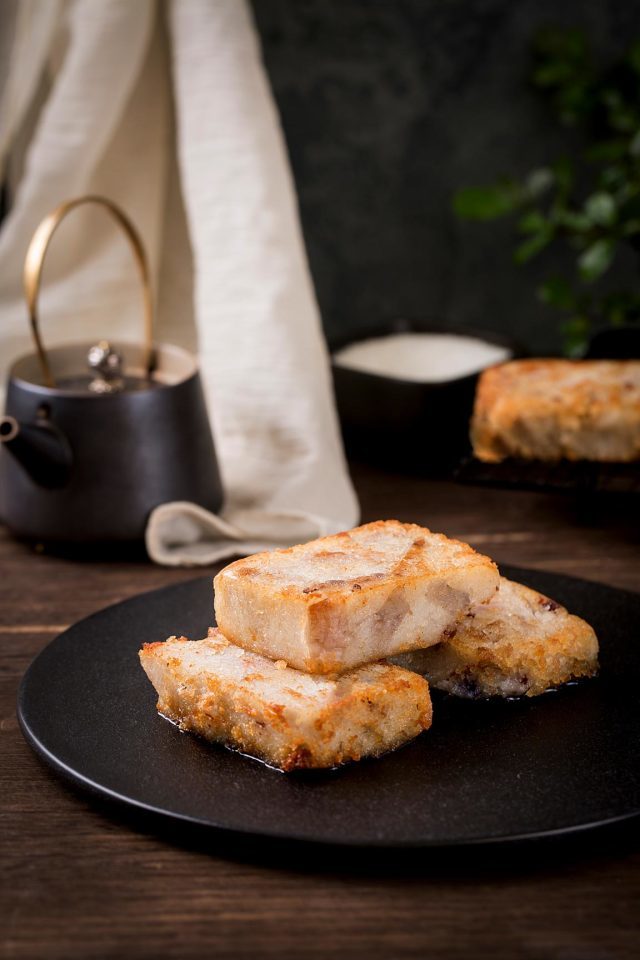
Taro Cake — 500 g × 12 pieces per bag, 12 bags per carton; steamed for 6–8 minutes or pan-fried until golden on both sides.
3. Acceptance criteria agreed before the first shipment
Quality control at the factory follows a defined sequence: a 100% pre-shipment test, weighing and verification of the declared weight, a check of packaging seal and label information for completeness including no leaks or bulging bags, and microbiological safety testing using the plate count method for colony and coliform bacteria. Buyers should mirror these checks at goods-in and record the results against the shipment, so that any deviation is documented rather than described.
4. After-sales with a named channel
Long-term supply depends less on the absence of problems than on how problems are handled. The support structure includes rapid customer complaint response with 24-hour support; a documented process for damaged goods and spoiled or thawed items; cold chain logistics at −18 °C throughout the entire process; free technical support covering steaming parameters, store menu matching and practical preparation guidance; certification documents supplied with each order, including quality inspection reports, production qualifications and export customs declaration documentation; and customised value-added services such as flavour adjustment, custom packaging and new product samples.
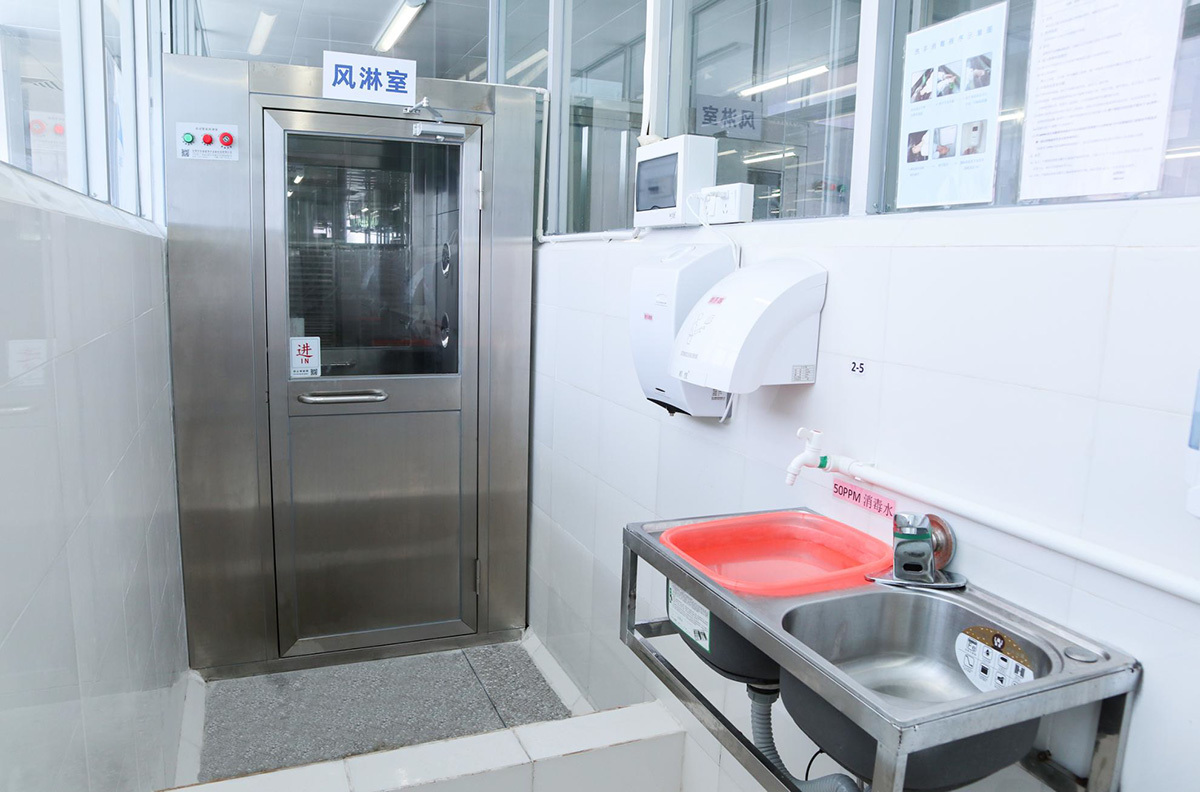
A disinfection centre inside the production facility — part of the hygiene infrastructure behind documented pre-shipment testing.
Step-by-Step Breakdown: Onboarding a Long-Term Frozen Dim Sum Partnership
- Define the menu role of each SKU. Decide which items carry base volume and which carry differentiation. Steamed buns such as char siu bao, steamed custard bun and Lava Custard Bun are typically the volume layer; layered and pan-fried cakes such as Water Chestnut Cake, Taro Cake and Coconut Golden Cake are the differentiation layer.
- Fix pack format and carton arithmetic. Confirm bag weight, pieces per bag and bags per carton for every SKU so that pallet planning and portion costing are calculated from the same numbers. Examples: shrimp dumplings 270 g / 9 pieces × 15 packs per carton; Shrimp Siu Mai 270 g / 9 pieces × 20 packs; chicken sticky rice 900 g / 6 pieces × 12 bags or 720 g / 6 pieces × 12 bags.
- Agree acceptance criteria and documentation. Write the goods-in checklist against the factory's own pre-shipment sequence — weight verification, seal and label completeness, no leaks or bulging bags, microbiological plate count results — and name who holds the records.
- Confirm commercial terms. The minimum order quantity is 50 boxes or more, lead time is 7–14 days, and monthly capacity is 50 million units. OEM/ODM is supported, with logos and product details customised according to customer requirements.
- Lock the cold chain. Storage and transport run at or below −18 °C throughout, which preserves freshness and prevents buns from drying out and cracking. Receiving checks should confirm vehicle temperature and carton condition before unloading is signed.
- Set a review cadence. Use the free technical support to align steaming parameters and menu matching at launch, then add new product samples each cycle so the range keeps pace with the buyer's menu rather than lagging behind it.
Use Cases: Where Frozen Cantonese Dim Sum Fits
Frozen dim sum programmes are used to enrich menus at teahouses, as main and side dishes in restaurants, and for convenient breakfasts and afternoon teas in retail channels. They also provide quick-cooking ingredients for banquets, tea breaks and takeout meals.
- Importers and frozen food distributors. A single-source range with one documentation set simplifies customs handling and reduces the number of supplier relationships to manage. Application scenarios of this type are common in the United States, Canada, Mexico, Germany and Malaysia.
- Cantonese teahouses and restaurants. The combination of steamed buns for base volume and cakes or fried items for signature dishes lets a kitchen cover morning tea, afternoon tea and banquet tea breaks from one freezer.
- Catering institutions and hotels. Schools, corporate canteens, hospitals, nursing homes and government canteens, plus star-rated hotels, guesthouses and resorts, benefit from heat-and-serve items that reduce kitchen manpower and preparation time.
- Retail channels. Supermarkets, community fresh food stores and convenience stores use frozen dim sum for convenient breakfast and afternoon-tea ranges; this application scenario is common in Canada and Australia.
- Overseas Chinese restaurants and Chinese supermarkets. Trade and foreign-trade buyers supplying Chinese restaurants and supermarkets abroad rely on consistent taste and uniform size, which avoids the inconsistent textures that occur with handmade products.
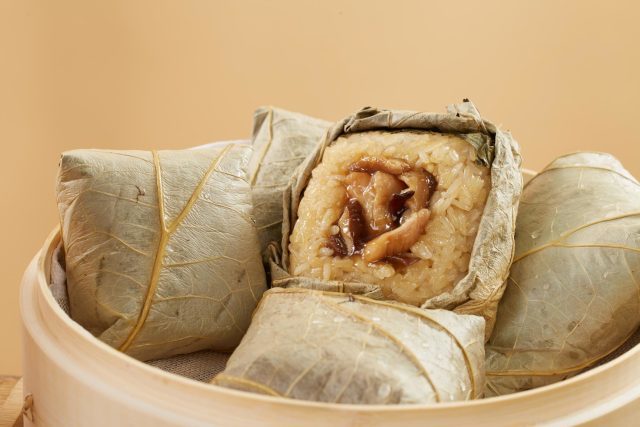
Chicken with glutinous rice — 900 g / 6 pieces per bag × 12 bags, steamed from frozen for 20–25 minutes.
Product and Pack Reference for Programme Planning
| Product | Pack and carton format | Heat-and-serve method | Typical menu role |
|---|---|---|---|
| shrimp dumplings | 270 g / 9 pieces × 15 packs | Steam 7–8 min; pan-fry from frozen | Signature morning-tea item |
| Shrimp Siu Mai | 270 g / 9 pieces × 20 packs | Steam 12 min | Signature morning-tea item |
| char siu bao | 480 g (120 g × 4) × 18 bags; 720 g (120 g × 6) × 18 bags | Steam 10 min | Volume staple |
| steamed custard bun | 420 g / 12 pieces × 18 packs | Steam 8–10 min | Sweet breakfast and afternoon tea |
| Lava Custard Bun | 480 g / 12 pieces × 18 bags | Steam 8 min | Signature sweet item |
| chicken sticky rice | 900 g / 6 pieces × 12 bags; 720 g / 6 pieces × 12 bags | Steam 20–25 min | Meal replacement, banquet |
| Water Chestnut Cake | 500 g × 12 bags | Steam 6–8 min | Differentiating tea pairing |
| Taro Cake | 500 g / 12 pieces × 12 bags | Steam 6–8 min or pan-fry | Savoury snack, dual service style |
| Red Bean Cake | 500 g × 12 bags | Steam 6–8 min | Layered dessert |
| Steamed Black Sesame Kuih | 500 g × 12 bags | Steam 6–8 min | Low-fat dessert |
| Coconut Golden Cake | 300 g × 20 bags | Pan-fry or steam 6–8 min | Banquet and morning tea |
| Hong Kong style spring rolls | 216 g / 12 pieces × 20 bags | Fry at 150–160 °C for 3–4 min | Fried selection |
| Golden Durian Crisp | 250 g / 10 pieces × 12 bags | Fry at 160 °C for 5 min | Premium fried selection |
| Millet cake | 280 g × 30 bags | Steam 7–8 min or pan-fry | Whole-grain snack |
| Vegetarian Lo Han Jai | 400 g × 12 boxes per carton | Thaw naturally, then boil | Vegetarian main dish |
| Buddha Jumps Over the Wall | 1.5 kg / 2.25 kg / 3.5 kg | Pre-prepared, ready to heat | Banquet and gift main dish |
Pack formats and preparation methods as specified in the product range; buyers should confirm the exact specification for their market on the approved sample.
Comparison Table: Cantonese Steamed Buns vs Steamed Cakes in a Recurring Programme
The most common range decision in a frozen dim sum partnership is not brand against brand — it is category against category inside the same order. Steamed buns and steamed cakes behave differently in volume, shelf life and menu positioning, and the difference determines how a buyer should allocate the first order.
| Decision dimension | Cantonese steamed buns | Cantonese steamed cakes (Water Chestnut Cake, Black Sesame Kuih, Red Bean Cake, Taro Cake) | What it means for a partnership order |
|---|---|---|---|
| Primary role | Staple food with large consumption volume and a stable repurchase rate | Differentiating snack positioned for afternoon tea and higher-end dining | Buns anchor the base order; cakes justify a premium menu line |
| Frozen shelf life at −18 °C | 12 months | 6 months for steamed cakes | Cakes should not be ordered on the same rotation cycle as buns |
| Customer pull | Fillings such as custard bun and char siu bao act as a strong selling point that attracts customers | Light, refreshing profile suited to pairing with tea; high visual appeal that raises the perceived quality of a menu | Use buns for traffic, cakes for perceived value |
| Competitive gap | Widely available across suppliers | Differentiation opportunity, as pastry categories are comparatively thin among competitors | A cake line is the simpler route to a menu identity |
| Best-fit scenarios | Breakfast shops, group catering, convenience stores, casual teahouses and volume-focused export customers | Mid-to-high-end teahouses, afternoon tea, banquet tea breaks and operators building signature items | Match the SKU mix to the service model, not to warehouse capacity |
| New-merchant entry | Start here for stable base sales | Add a small batch to test market response | Combined stocking is the recommended configuration: buns stabilise base sales while cakes create a unique selling point, together covering all customer traffic through the day |
FAQ: Long-Term Frozen Dim Sum Partnerships
What documentation and compliance evidence accompanies each frozen dim sum shipment?
Each order is supplied with certification documents that include quality inspection reports, production qualifications and export customs declaration documentation. Frozen dim sum is commonly exported under HS Code 1902200000 and 1902309000, and buyers should verify the classification recorded on the commercial invoice and customs declaration. Where the destination or the end restaurant operates under labelling rules — Guangzhou, for example, requires restaurants from 1 May 2026 to state clearly whether dim sum is handmade on-site or produced by central kitchens or from pre-made products — the manufacturer's production qualifications and per-order documents allow the buyer to support that disclosure.
What acceptance criteria should a buyer apply when a shipment arrives?
Acceptance should mirror the factory's pre-shipment sequence. Production is subject to a 100% pre-shipment test covering weight verification, a check of packaging seal and label information for completeness including no leaks or bulging bags, and microbiological safety testing using the plate count method for colony and coliform bacteria. On receipt, the buyer should confirm vehicle and carton temperature at or below −18 °C, re-verify weight against the approved specification, inspect seals and labels, and record the check against the shipment. Damaged goods and spoiled or thawed items are handled with supporting documentation, and complaint response is supported within 24 hours.
Should a distributor stock Cantonese steamed buns or steamed cakes first?
There are three valid configurations. Prioritising steamed buns suits buyers who need to satisfy hunger, reach a broad customer base and maintain a stable repurchase rate, with a 12-month shelf life giving more flexible inventory turnover and fillings such as custard bun and char siu bao acting as a strong selling point; this fits breakfast shops, group catering, convenience stores, casual teahouses and volume-focused export customers. Prioritising steamed cakes suits buyers seeking differentiated competition where competitor pastry ranges are comparatively thin, with a light and refreshing profile for tea pairing and high visual appeal; this fits mid-to-high-end teahouses, afternoon tea and banquet tea breaks. The combined configuration is the recommended option for a recurring programme: buns stabilise base sales, cakes create a unique selling point, and the two categories together cover all customer traffic through the day.
Can a new partner test products before committing to a recurring programme?
Yes. The minimum order quantity is 50 boxes or more, which allows a first order to function as a market test rather than a full range commitment. Customised value-added services support flavour adjustment, custom packaging and the sending of new product samples, and OEM/ODM production allows logos and product details to be customised according to customer requirements. Free technical support is available during the trial, covering steaming parameters, store menu matching and practical guidance on food preparation, so that the test reflects the product as it will actually be served.
What are the purchasing terms and lead times for repeat orders?
Purchasing runs on a minimum order quantity of 50 boxes or more, with a lead time of 7–14 days and a monthly capacity of 50 million units. Because steamed buns carry a 12-month frozen shelf life while steamed cakes carry 6 months at −18 °C, a recurring programme should set separate reorder points for the two categories rather than a single cycle. Production date and shelf life are printed on the outer packaging of all products, so stock rotation can be managed from the carton itself. To build the first order against your own menu, contact the team at Kyle@dimsum-daxiao.com or +86 13726399586 with your SKU list and target market.
Conclusion: What a Reliable Cantonese Dim Sum Partnership Must Prove
A frozen dim sum partnership holds when four conditions are met: the range is wide enough to cover the menu without a second supplier, the specification is written into the pack rather than agreed verbally, acceptance criteria are documented before the first shipment, and after-sales runs through a named contact with a defined response time. Foshan Shunde Yuexiang Food Manufacturing Co.,Ltd. addresses these through over 300 items across five major series, a 20,000 m² facility operating with ISO9001, HACCP and FDA certifications, a 100% pre-shipment test regime with microbiological verification, and a support structure covering 24-hour complaint response, −18 °C cold chain logistics, free technical guidance on steaming and menu matching, and per-order certification documents.
For a distributor or foodservice buyer, the practical next step is to test the partnership against a defined order: select the SKUs that match your service model, confirm pack format and shelf-life rotation for each category, and set the goods-in checklist against the specification. A range that begins with volume staples and adds differentiated cakes after a market test is generally the lower-risk route into a recurring programme.
Start With a Sample, Then Scale
Discuss your frozen dim sum range with the manufacturer directly. Share your target market, preferred pack formats and first-order quantities, and request product samples, a specification sheet or a quotation for your opening order.
Foshan Shunde Yuexiang Food Manufacturing Co.,Ltd.
Email: Kyle@dimsum-daxiao.com
Tel / WhatsApp: +86 13726399586
Website: www.dimsum-daxiao.com
Address: No. 24, Xinghua West Road, Xingcha Village Committee, Jun'an Town, Shunde District, Foshan City, Guangdong Province, China
Product catalogue (PDF): Download the dim sum product catalogue
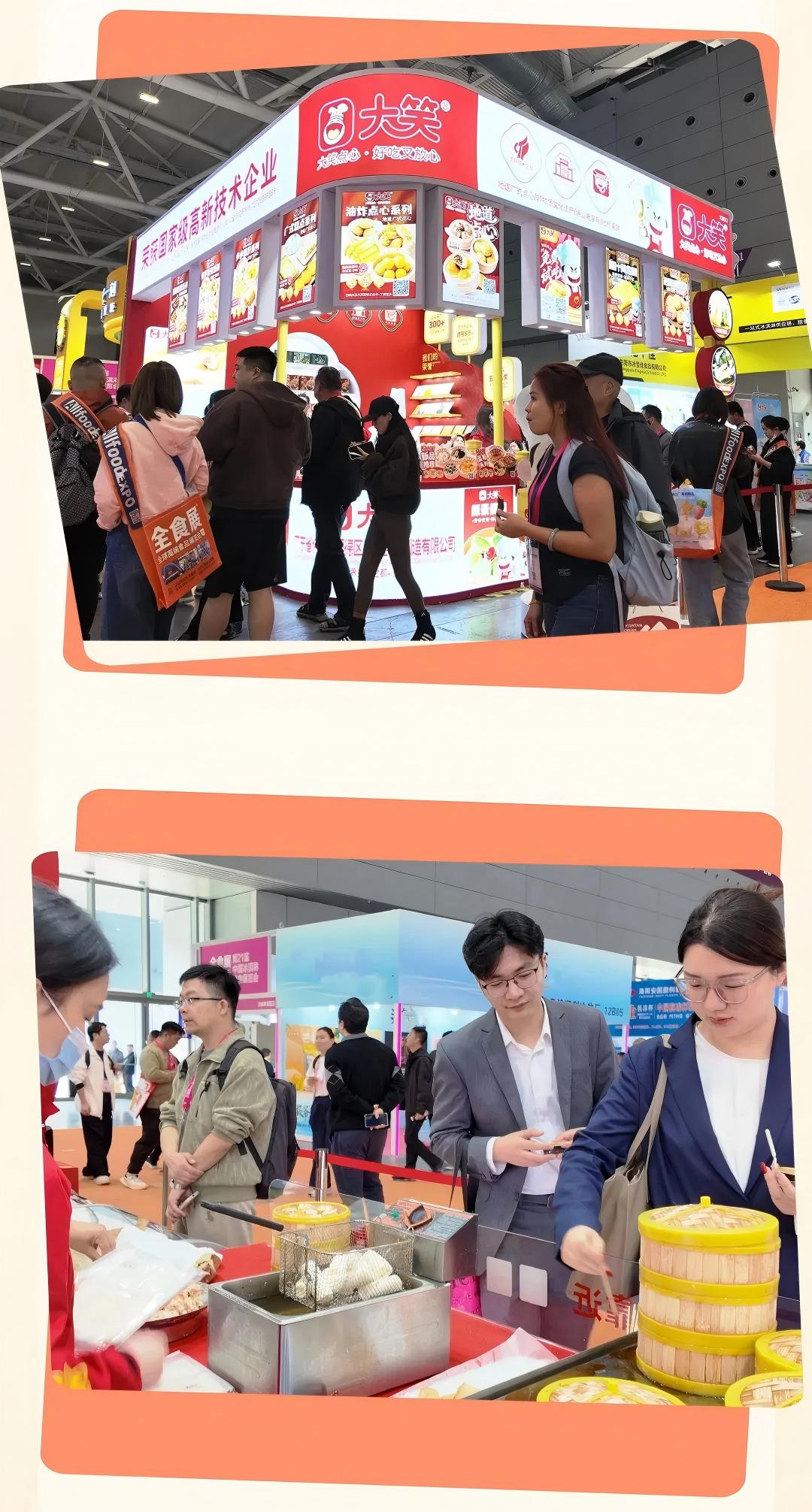
Meeting importers and distributors in person — partnership terms, samples and market-specific specifications are reviewed directly with the buyer.
Have Questions or Need More Details?
Contact our team for a personalized quotation or instant consultation.
Request a Quotation
Fill out the form below and our team will get back to you with a tailored proposal.
WhatsApp Direct Chat
Prefer to chat in real-time? Message us on WhatsApp for instant assistance & quick answers.
- Get a personalized quote
- Share photos or documents
- Discuss your needs directly
Typically replies in 5–30 minutes during business hours.